
Fort Myers Beach Seawall Replacement With a Raised Cap
On a canal lot on Fort Myers Beach, a 40 foot section of seawall had failed, with an old dock still attached to it. WB Williamson Bros. removed both and built a new wall with fiber reinforced precast panels, new tie-backs and deadman, and a GFRP reinforced cap set one foot above the original elevation.
All of it was done from land.
LOCATION
PROJECT TYPE
WALL LENGTH
PRIMARY CHALLENGE
The Client’s Situation
The failed section could no longer be relied on to hold the yard, and the dock attached to it had to come out with it. The scope called for a full replacement of that 40 foot section, built back with a higher cap than the wall it replaced.
What Made This Project Challenging
Working Entirely From Land
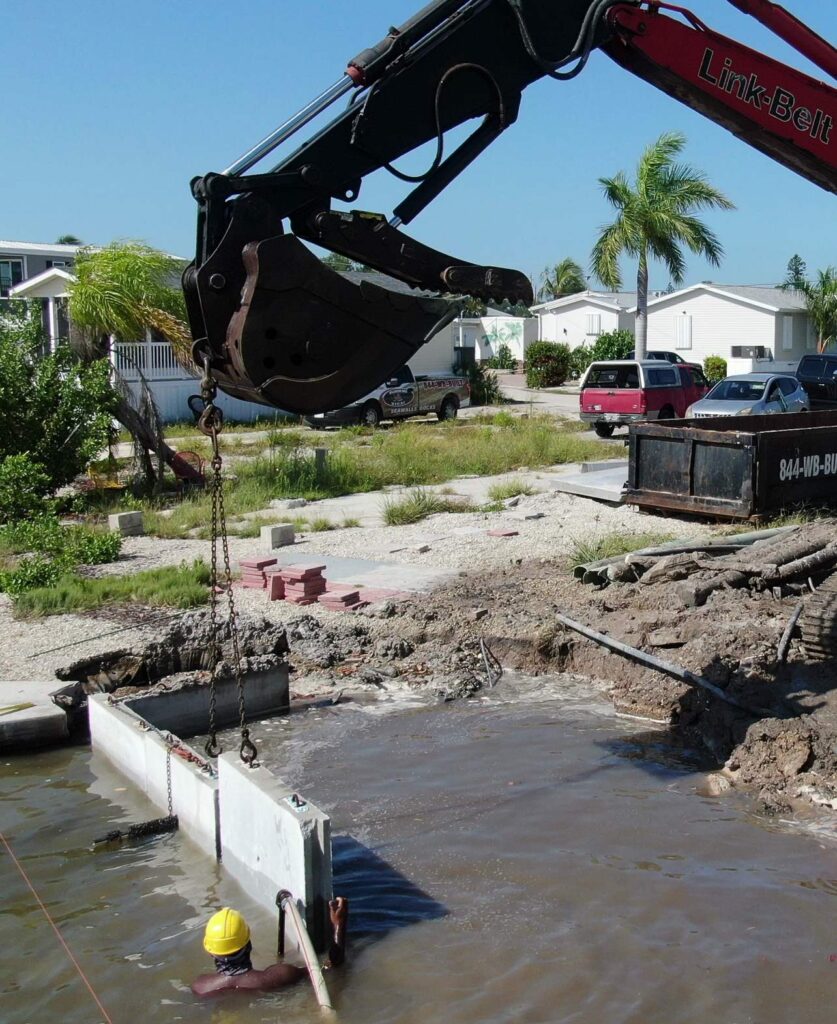
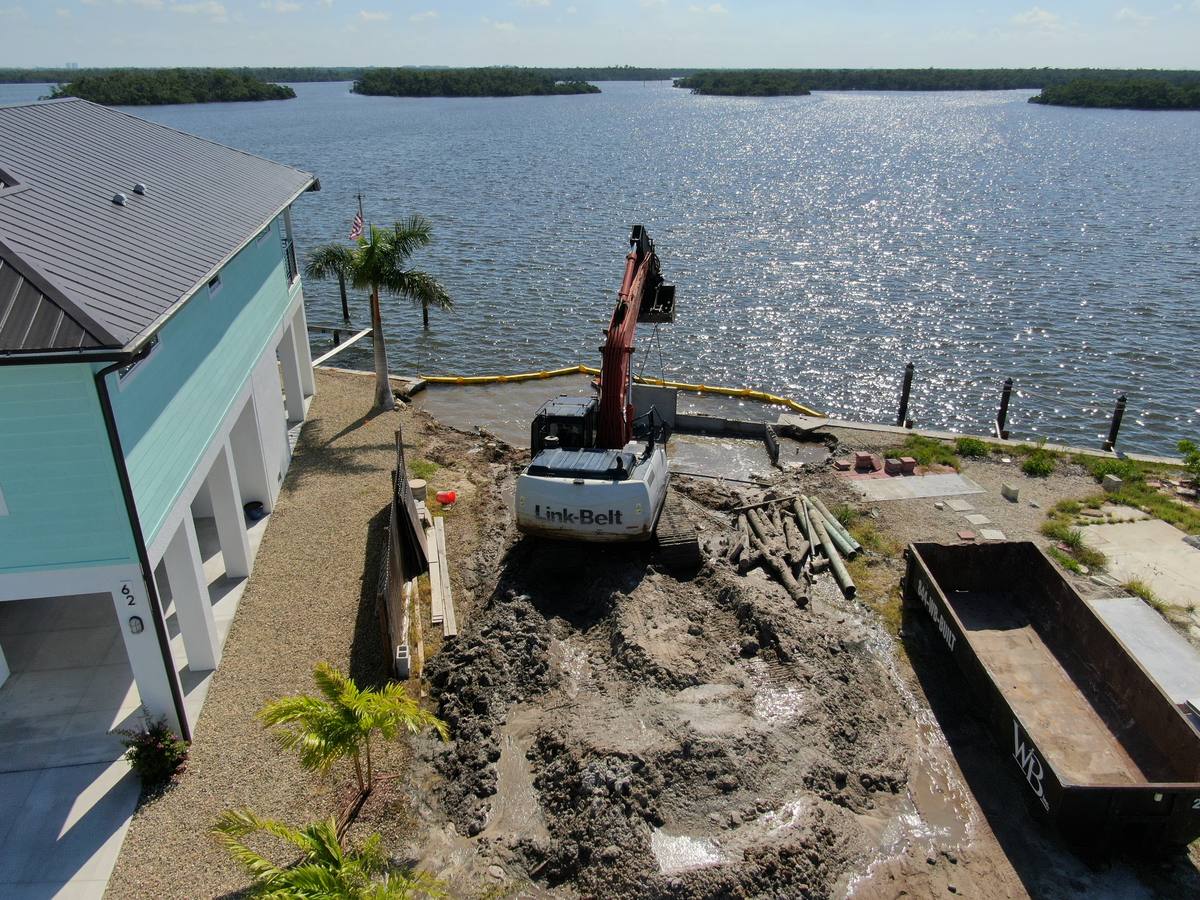
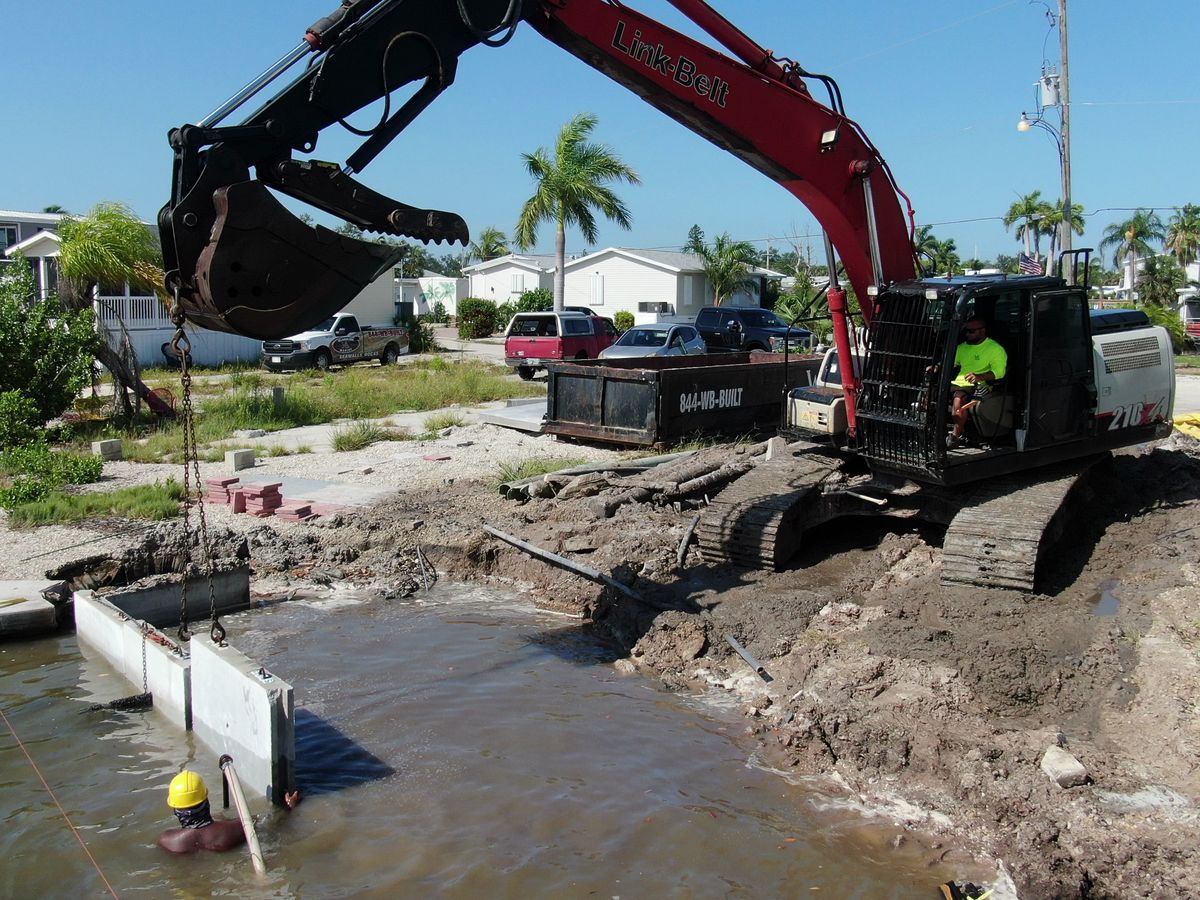
Demolition, panel setting, and cap pouring all had to be done from the lot with an excavator. That meant planning where the machine could work, where material could be staged, and how debris would be hauled out.
Transitioning a Higher Wall
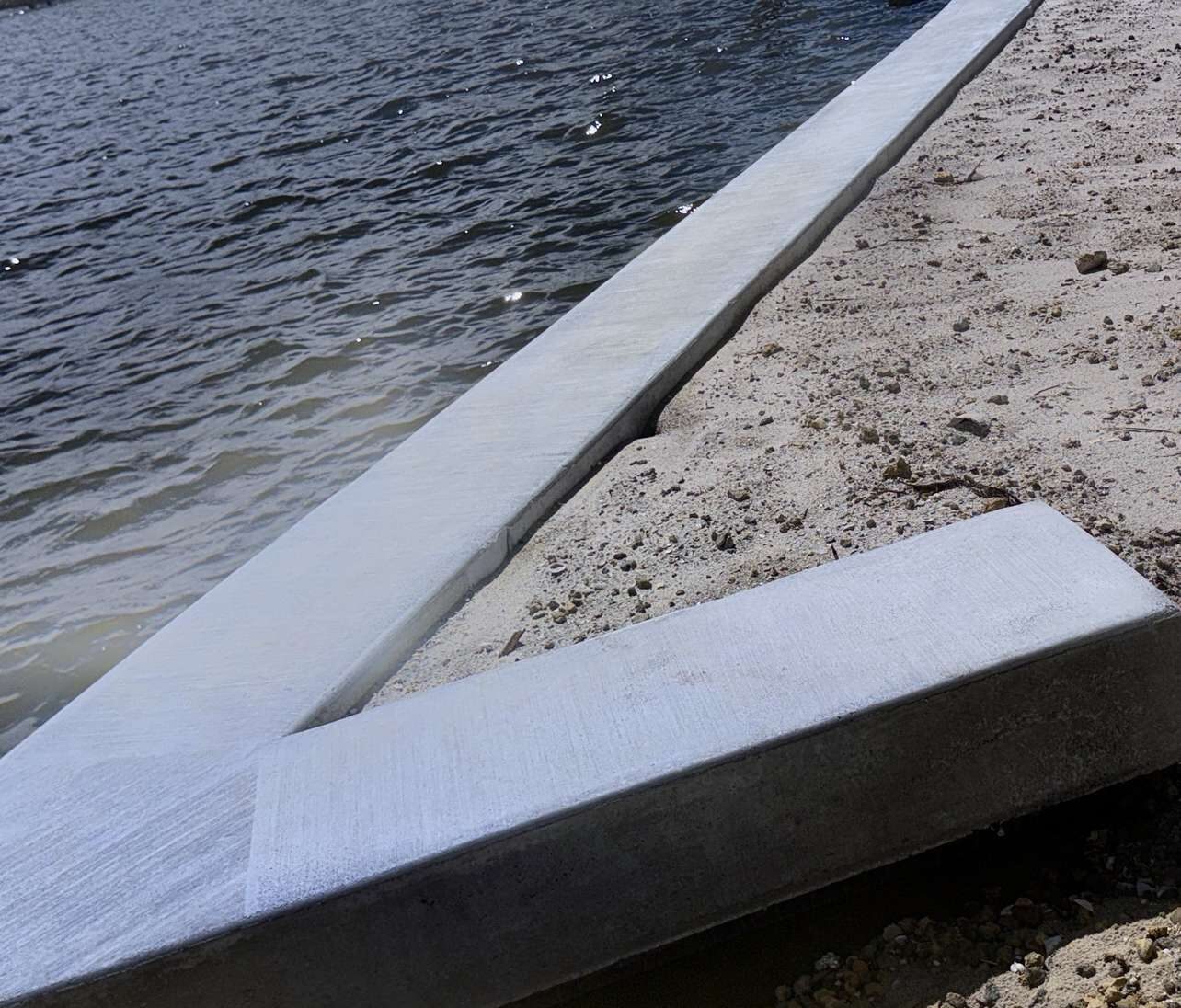
A wall that sits a foot higher than the shoreline next to it needs a solid transition at the ends, or soil can wash out around the sides.
Rebuilding the Support Behind the Wall
Seawall panels are held in place by tie-backs anchored to a buried deadman. New tie-backs and a new deadman were part of the scope, so the new wall is not relying on the old anchoring.
Our Seawall Replacement Solution
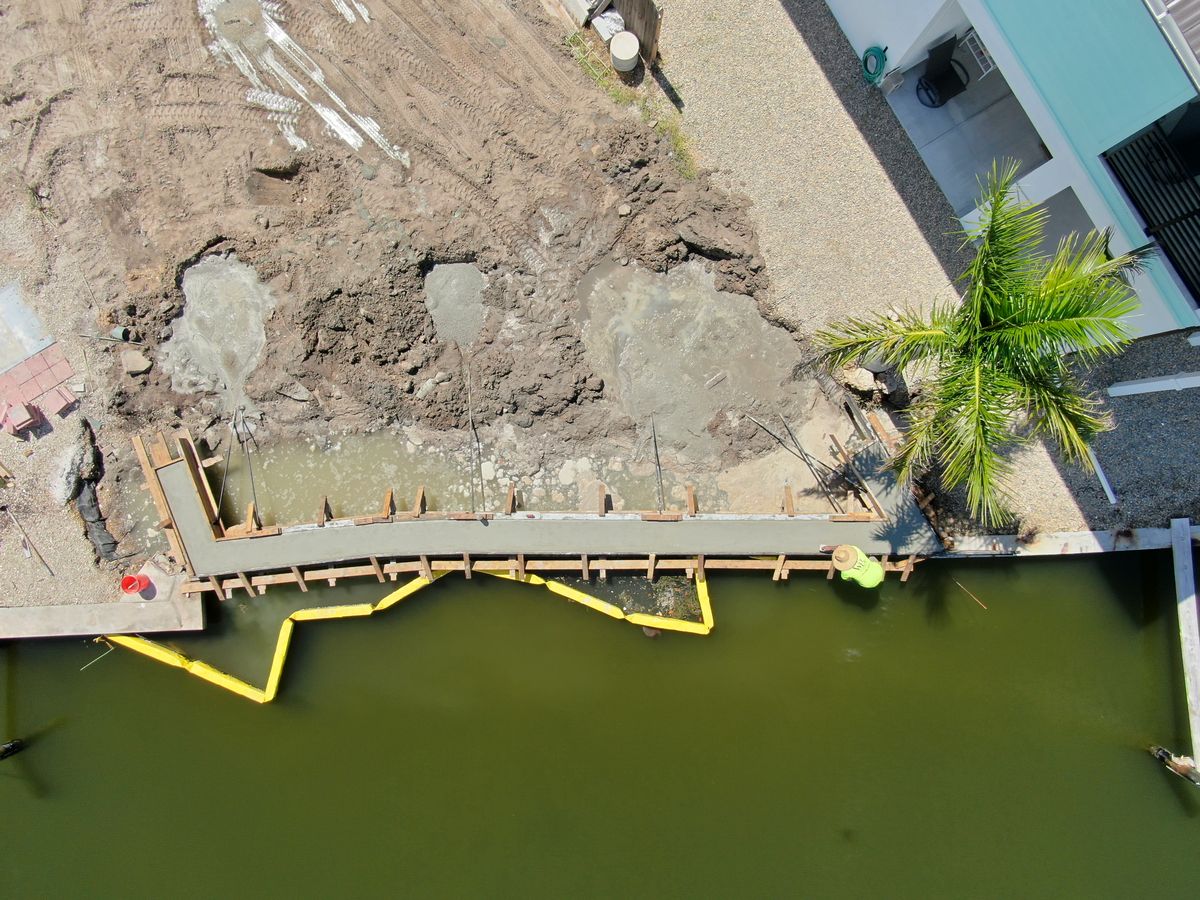
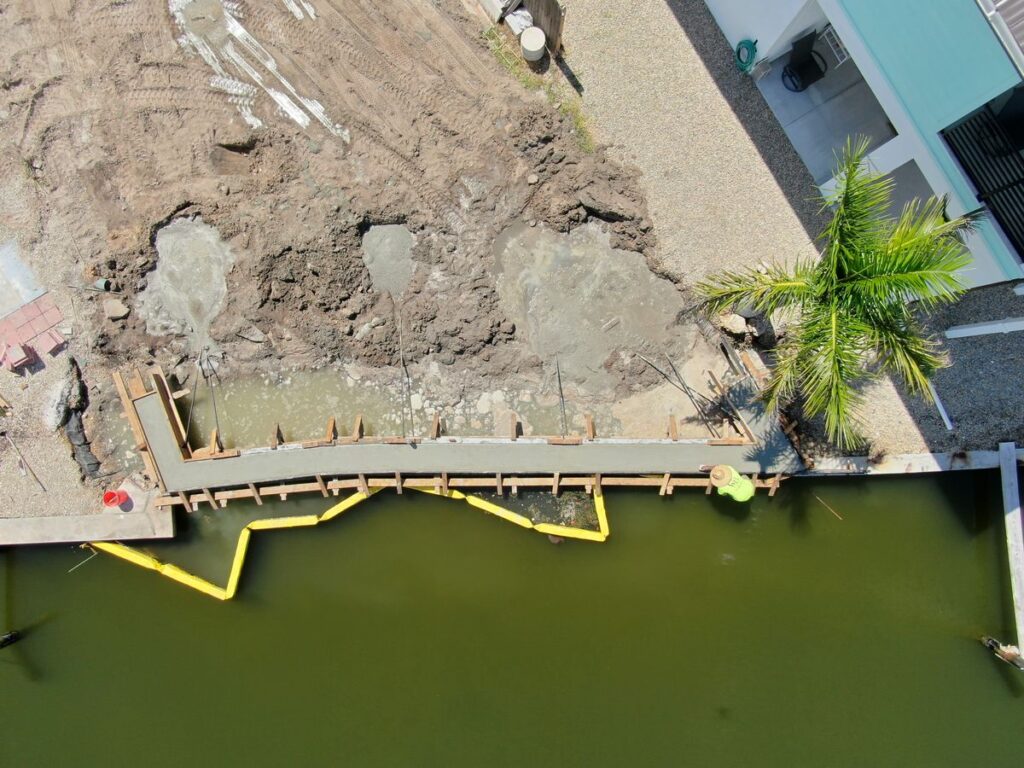
After the permits and engineering were in place, our crew demolished the existing dock and removed the failed section of seawall from land, with a turbidity barrier set in the canal.
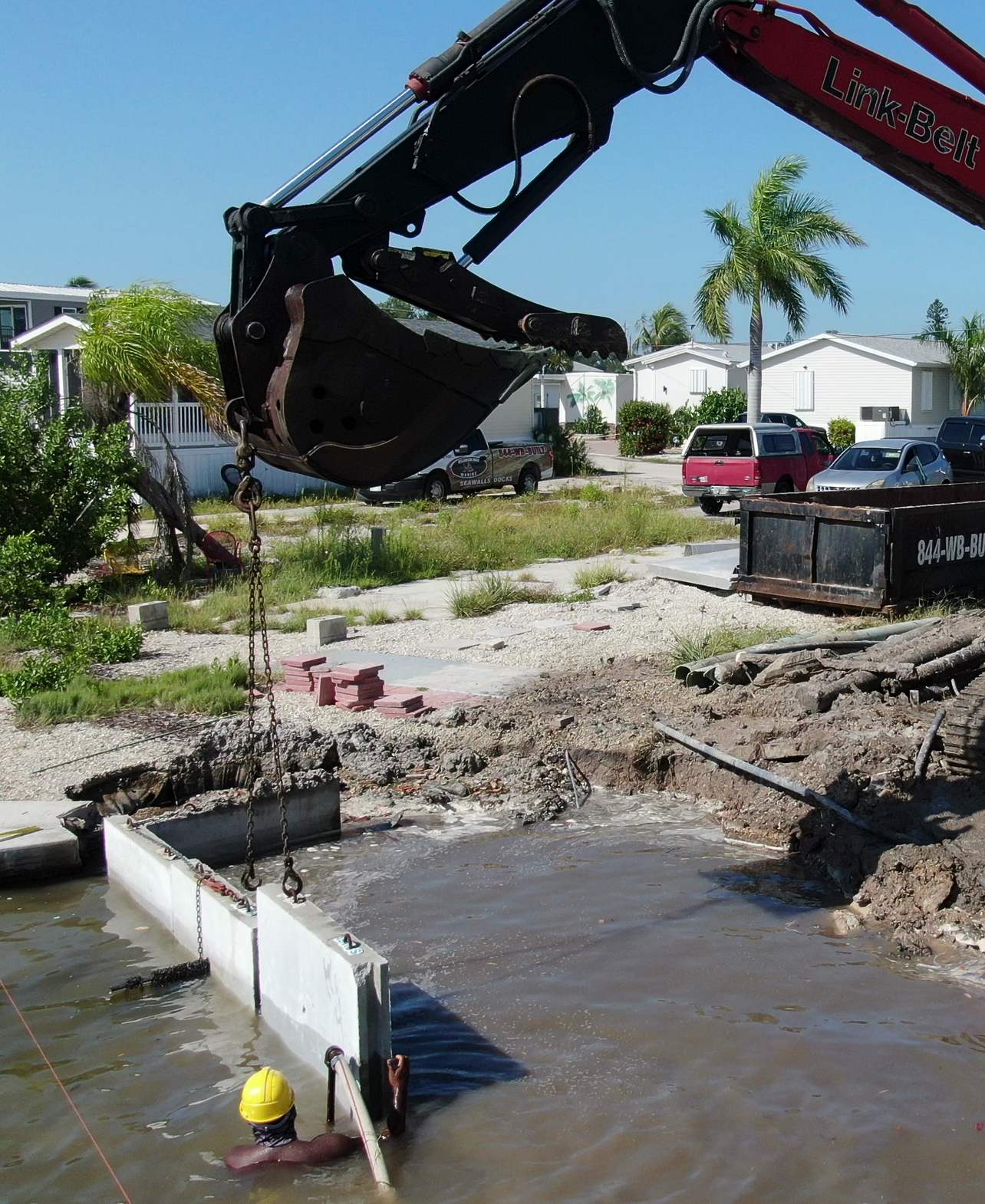
We then set new fiber reinforced 5,000 PSI precast concrete panels with the excavator and installed new tie-backs and deadman behind them. The new 10” x 20” cap was poured with 5,000 PSI concrete and reinforced with GFRP (glass fiber reinforced polymer) rebar, which does not rust in saltwater the way steel can. Capped return construction, also reinforced with GFRP, ties the higher wall into the adjoining shoreline.
Finally, the disturbed area was backfilled with available on-site material and rough graded.
Why the New Seawall Cap Was Raised
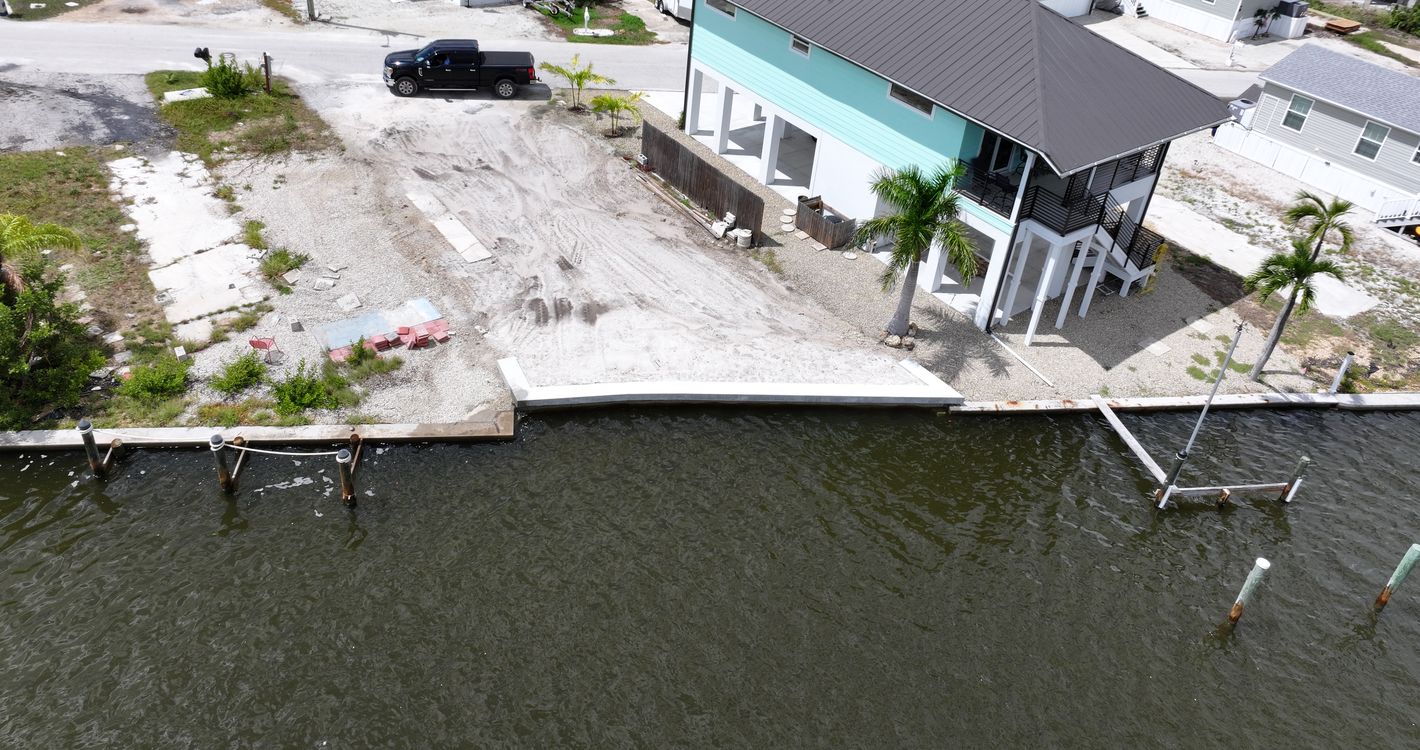
The replacement cap was specified one foot higher than the existing wall. Building the cap higher during a replacement is a practical way to add height at the shoreline while the wall is already being rebuilt. A higher cap gives the property more freeboard before water reaches the top of the wall during high tides. Adding that height now costs far less than trying to raise the wall later.
The Finished Result
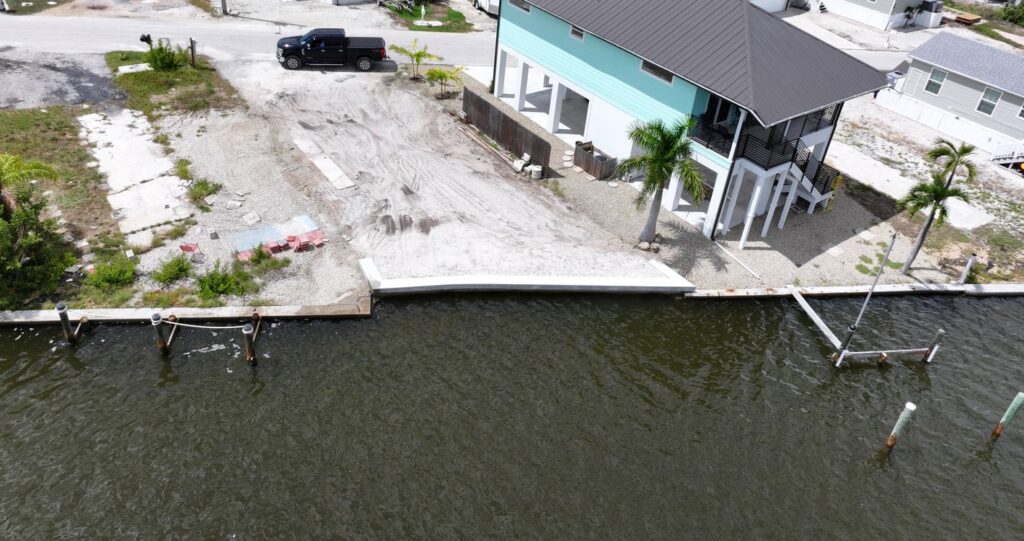
The failed section and the old dock are gone. In their place is 40 feet of new precast seawall with new anchoring behind it, a cap one foot higher than before, and capped return construction that ties the new height into the shoreline. The yard behind it has been backfilled and graded.
For another GFRP cap project, see our Cape Coral seawall repair and custom dock project.
Materials and Specifications
- 40 linear feet of seawall replaced by land
- Fiber reinforced 5,000 PSI precast concrete seawall panels
- 10” x 20” seawall cap, 5,000 PSI concrete with GFRP reinforcement
- Cap elevation 1 foot higher than the existing wall
- GFRP reinforced, capped return construction
- New tie-backs and deadman
- Demolition of the existing dock
- Backfill with on-site material and rough grading
Seawalls on Fort Myers Beach: Signs a Section May Need Replacement
Canal walls on Fort Myers Beach are exposed to saltwater, storm tides, and boat wakes. Signs a section may be failing include:
- Panels leaning toward the water or separating at the joints
- Cracked or broken sections of cap
- Sinkholes or soft spots in the yard behind the wall
- Rust stains on the cap from corroding steel inside
If you are planning a new dock or rebuilding on the lot, it usually makes sense to evaluate the seawall first.
Let's Talk About Your Project
Since 1996, WB Williamson Bros. has built and replaced seawalls for canal homes across Southwest Florida. Whether one section has failed or the whole wall is due, our team can evaluate your property and explain your options for seawall replacement.
Call 239-283-2013 or fill out the form below to schedule a free consultation.