
Rebuilding the Veterans Memorial Park Fishing Pier in Edgewater
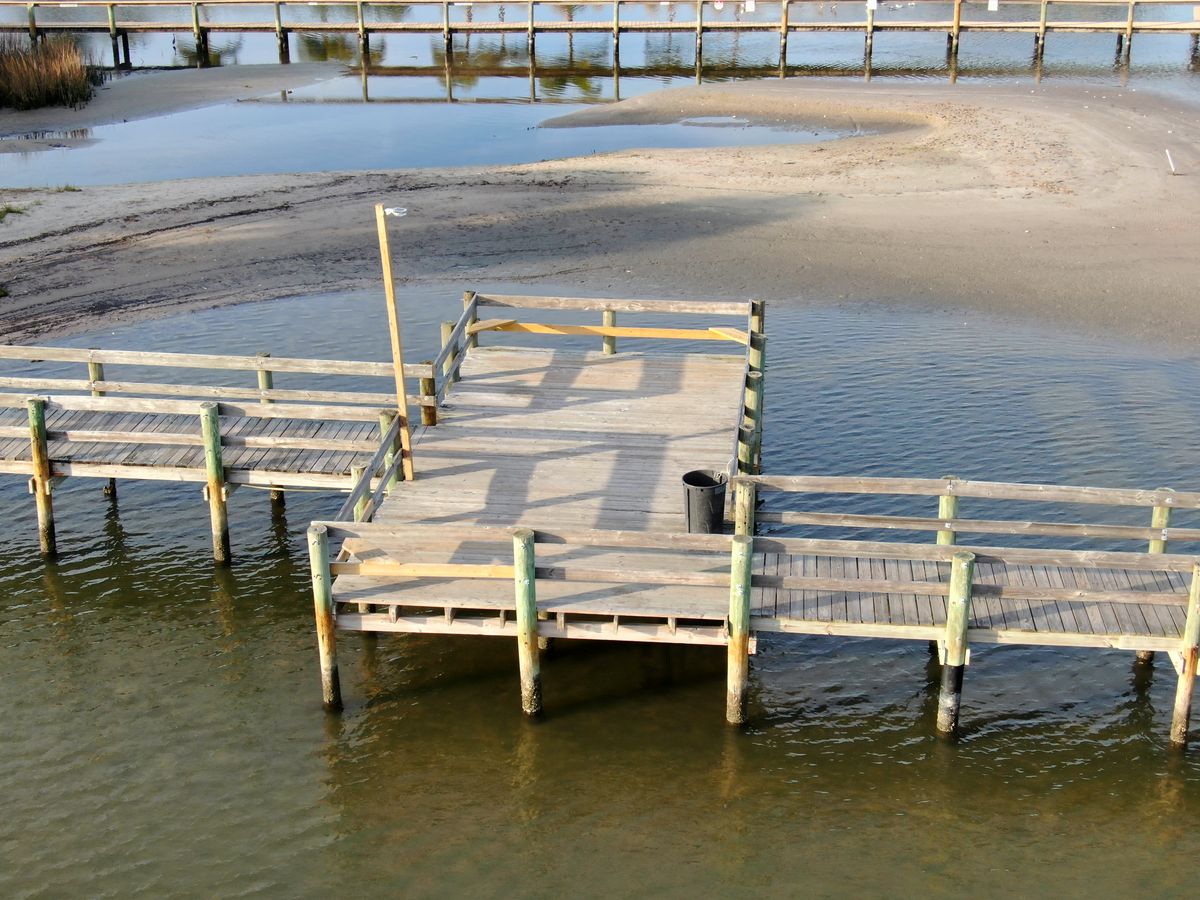
Veterans Memorial Park sits on South Riverside Drive in Edgewater, along the Indian River in Volusia County. Its pier was where locals walked out to fish and get past the shallows to deeper water. Hurricane Matthew in 2016 and Hurricane Irma in 2017 left it damaged, and the City closed it to the public.
The City of Edgewater hired WB Williamson Bros. to remove the old structure and build a new pier of approximately 2,500 square feet in its place. The replacement had to address the uplift that damaged the original, and it had to be built in water too shallow for standard marine construction equipment.
LOCATION
PROJECT TYPE
PIER SIZE
PRIMARY CHALLENGE
The Client’s Situation
The old pier was a timber structure with conventional plank decking. After back to back hurricane seasons, it was damaged badly enough that the City had to close it. For a riverfront park, losing the pier means losing one of the main reasons people visit.
The City wanted more than a like-for-like rebuild. The new pier needed to be designed around the conditions that contributed to the earlier damage.
What Made This Project Challenging
Storm Surge Uplift on an Exposed Pier
Piers are often damaged from below. When the river rises during a storm, waves push up against the underside of the deck. Solid plank decking traps that pressure, and once boards or framing begin to let go, damage can spread along the structure. Reducing that upward force was the City’s main design concern.
Very Shallow Water Along the Shoreline
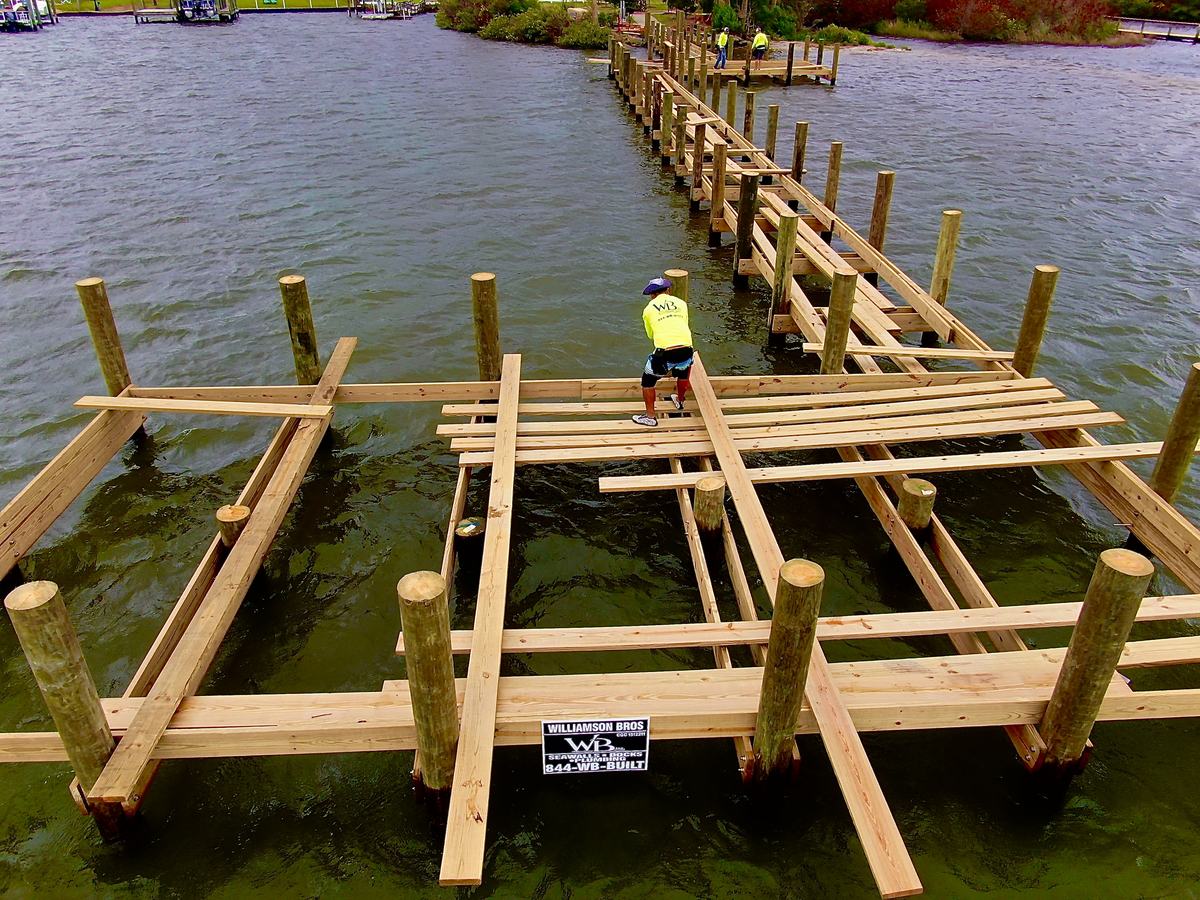
The water around Veterans Memorial Park stays shallow for a long way out, with sandbars exposed at low tide. A standard construction barge draws too much water to work there, so pilings, lumber, and equipment had to reach the work area another way.
Working Next to a Public Park
The pier connects to a landscaped park with walking paths and a memorial area. The work zone at the shoreline had to be fenced and controlled so crews could move heavy material without putting visitors or the grounds at risk.
Our Pier Replacement Solution
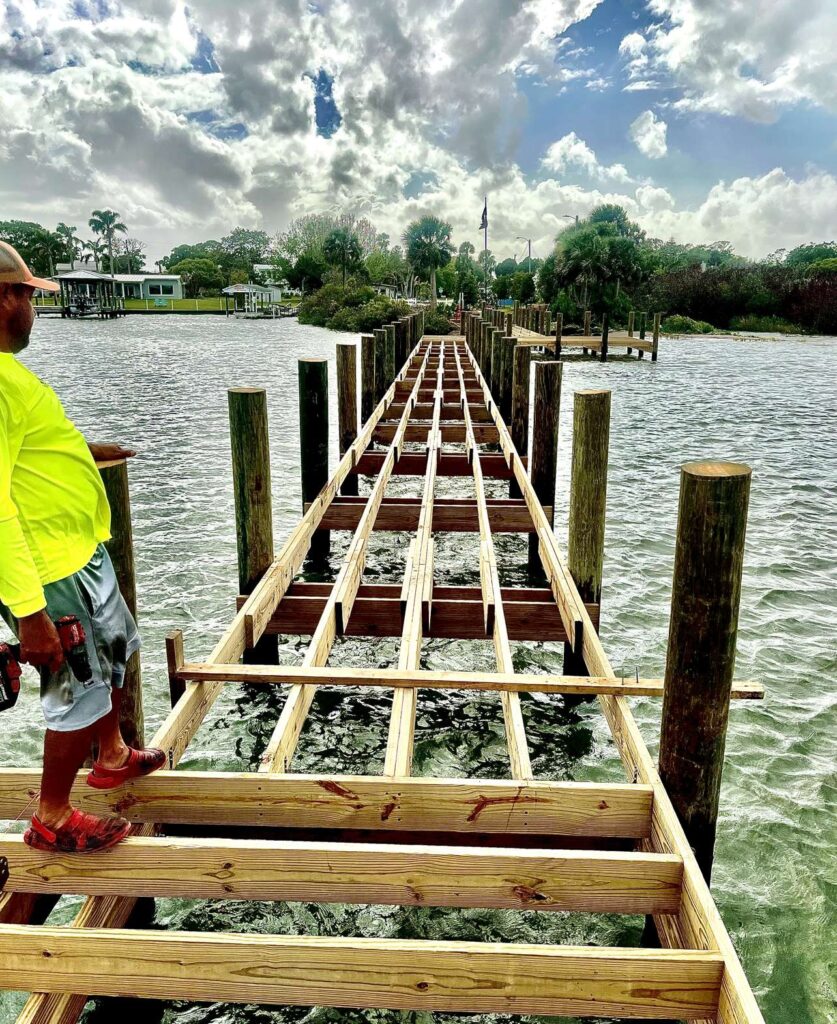
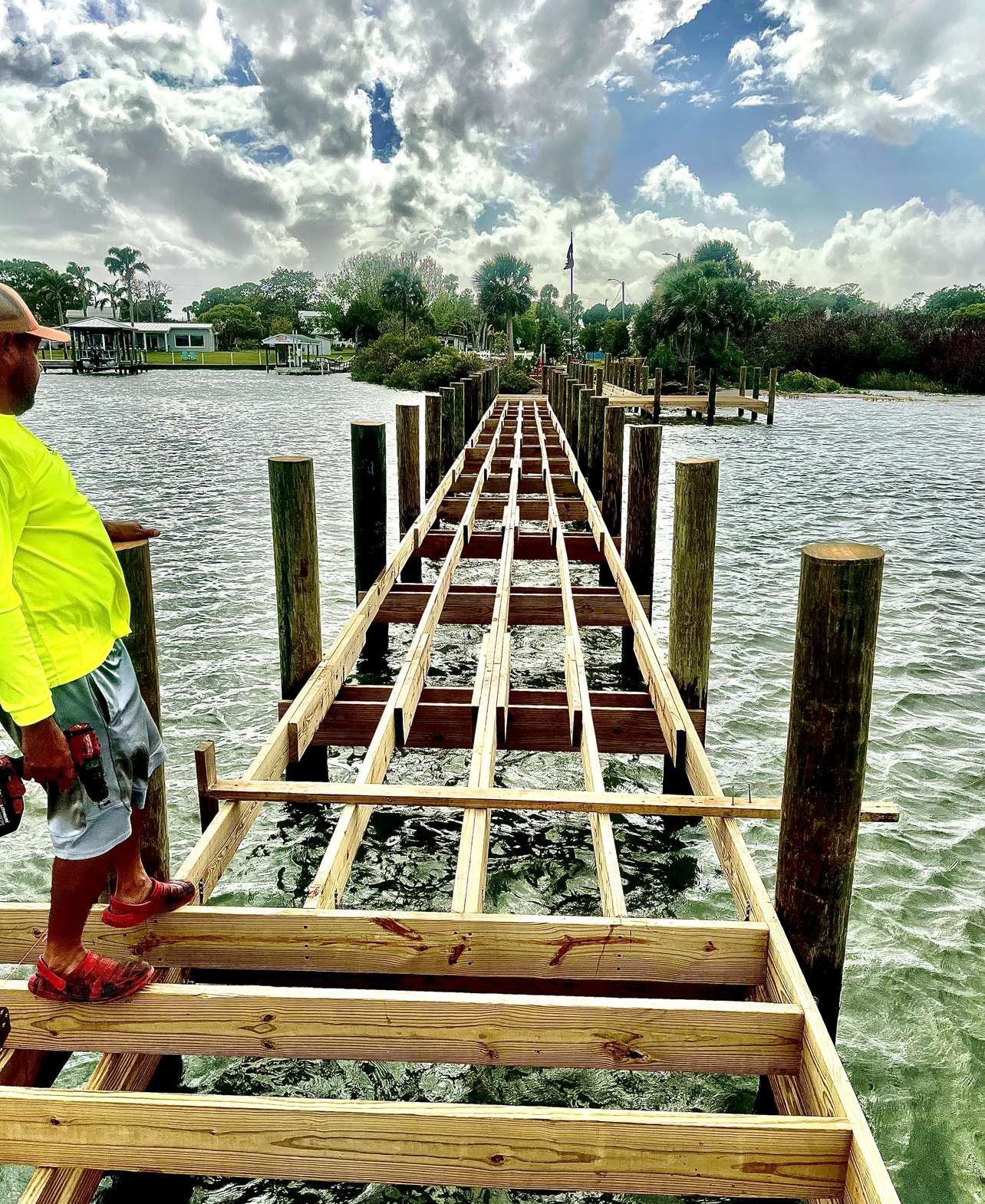
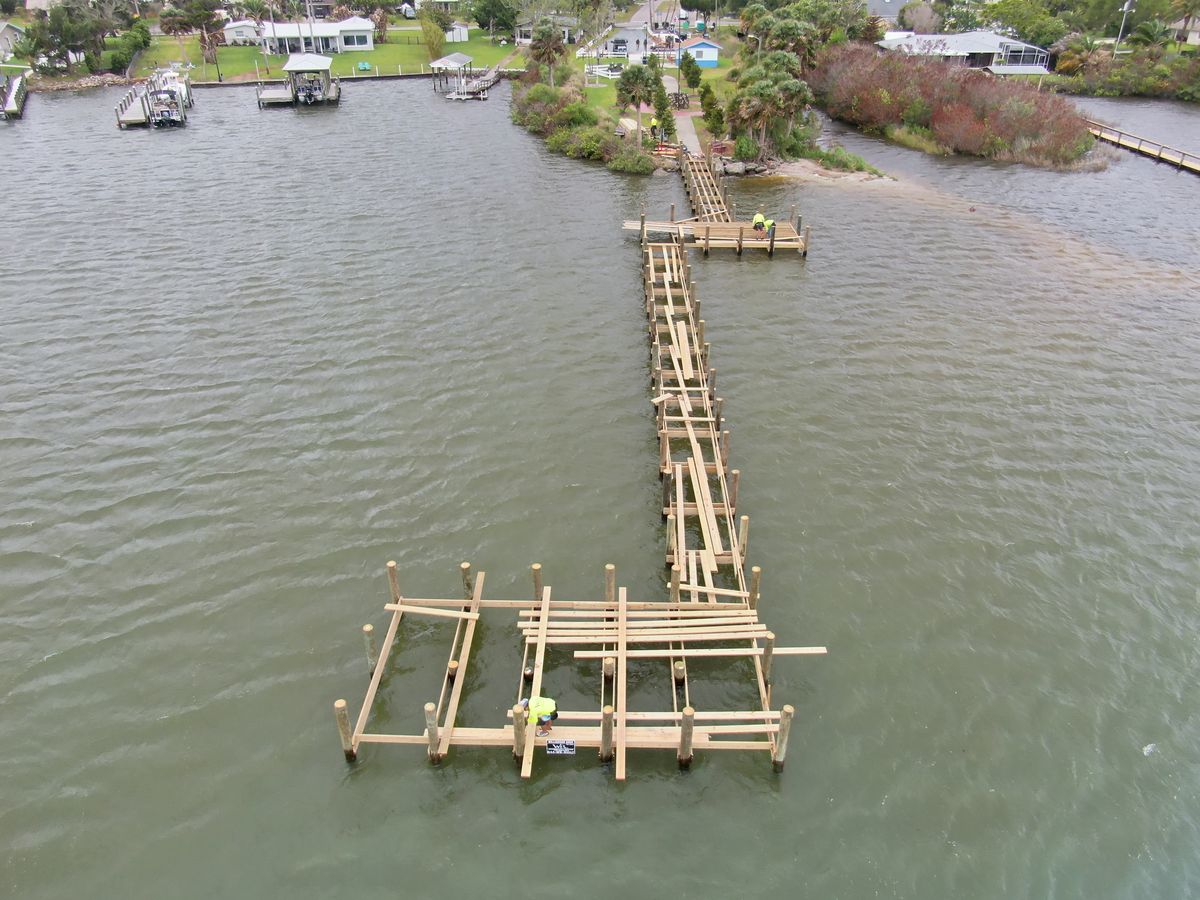
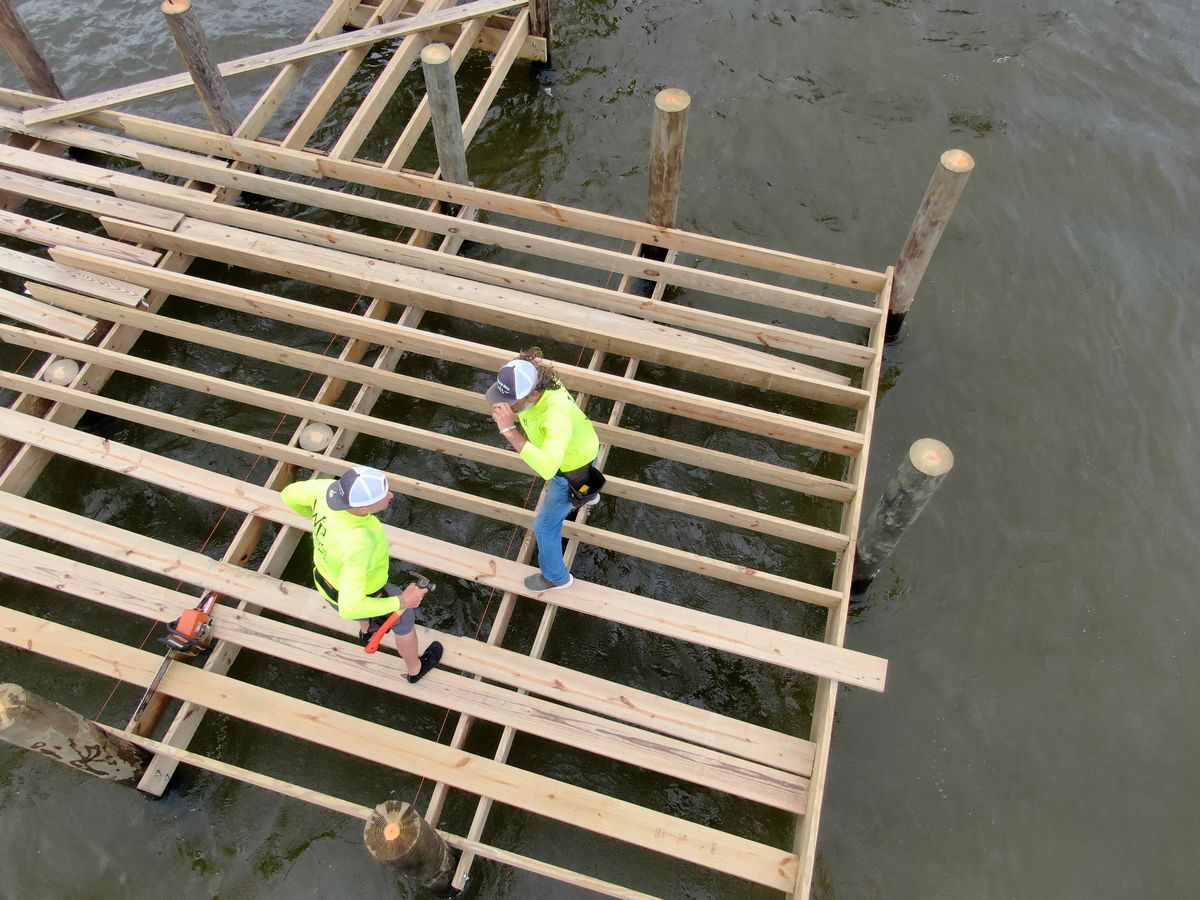
To work in the shallows, our crew used a specialized barge with a smaller draft than our standard equipment. That let us set pilings and stage material along the length of the pier without grounding on the sandbars.
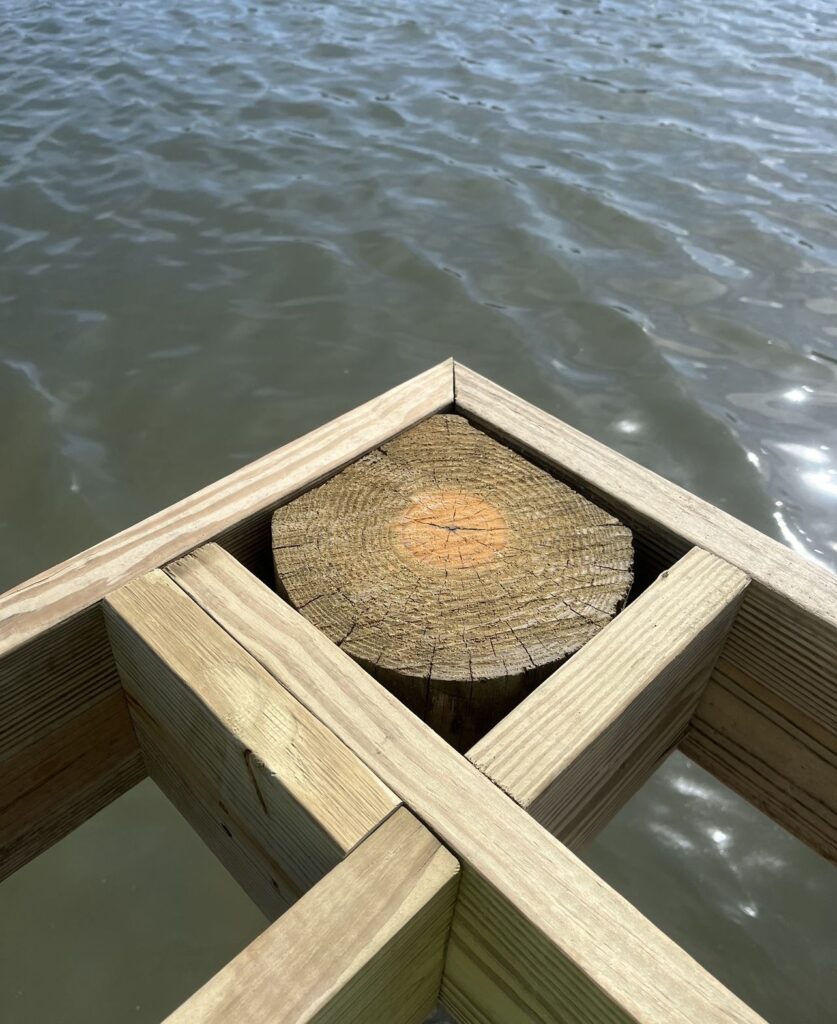
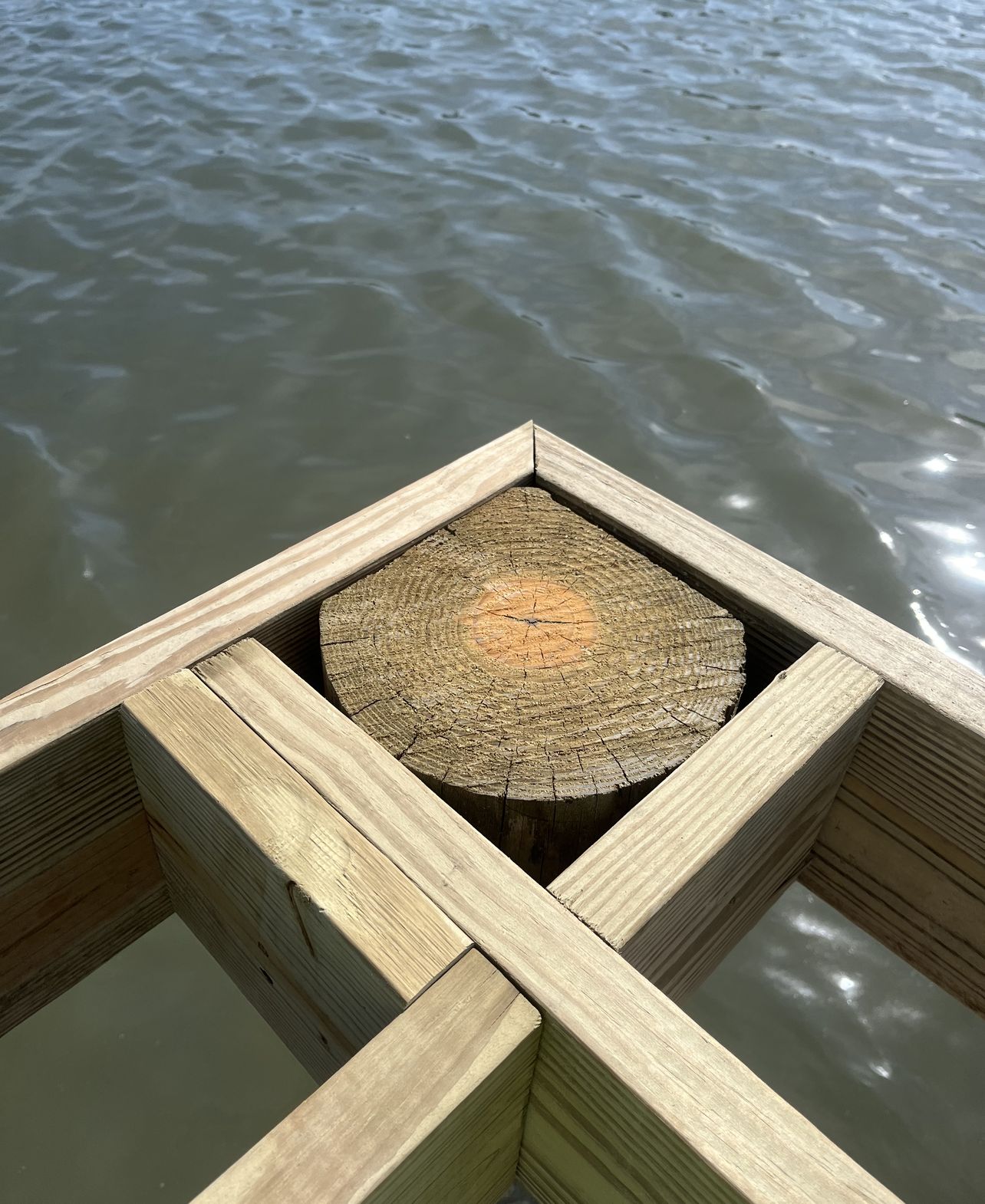
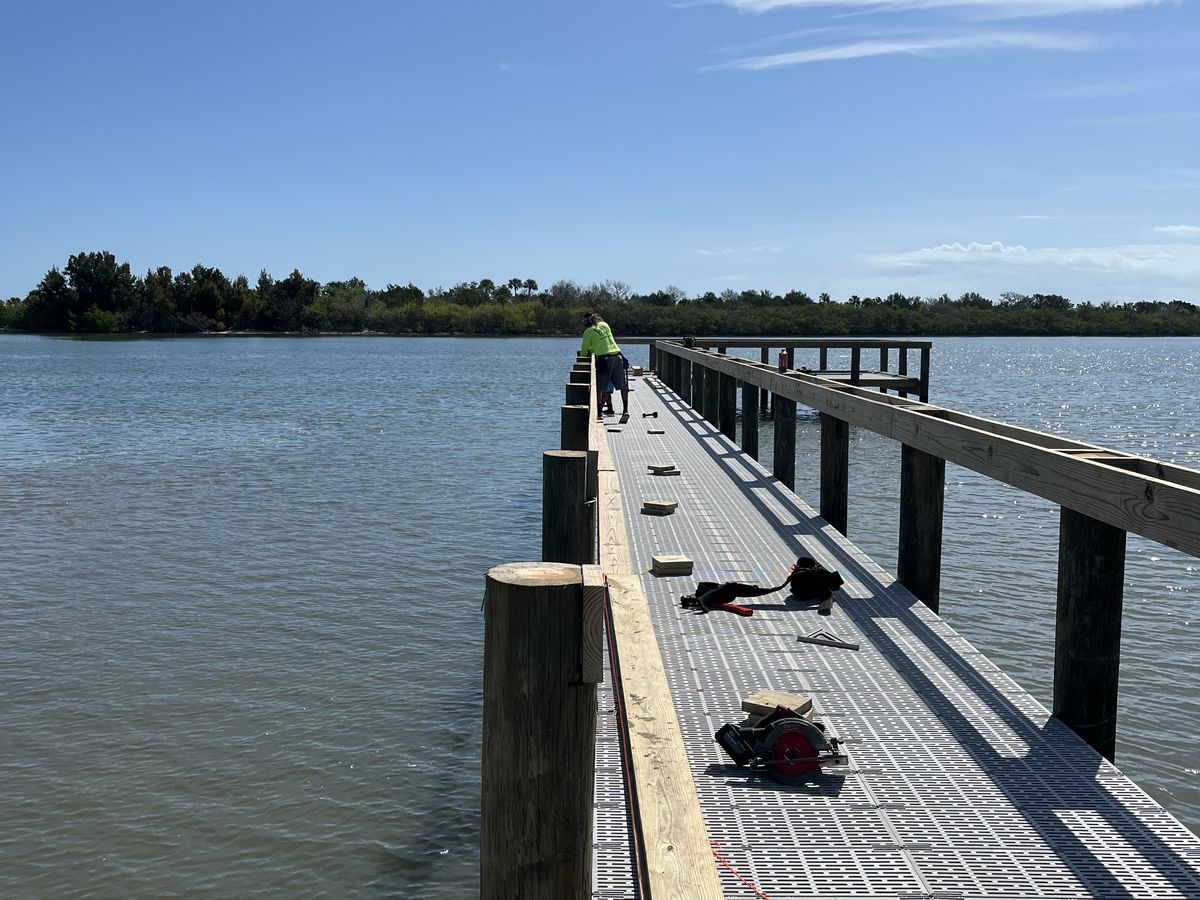
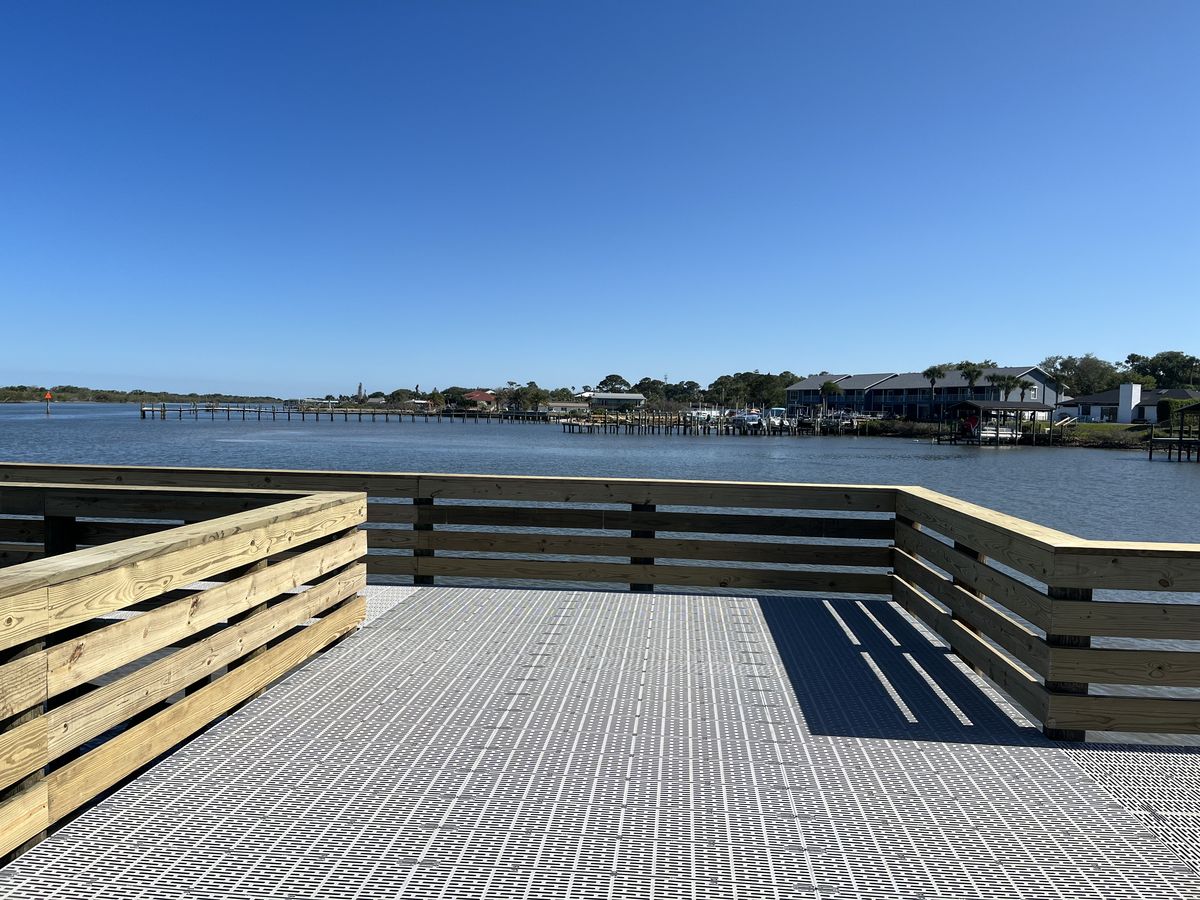
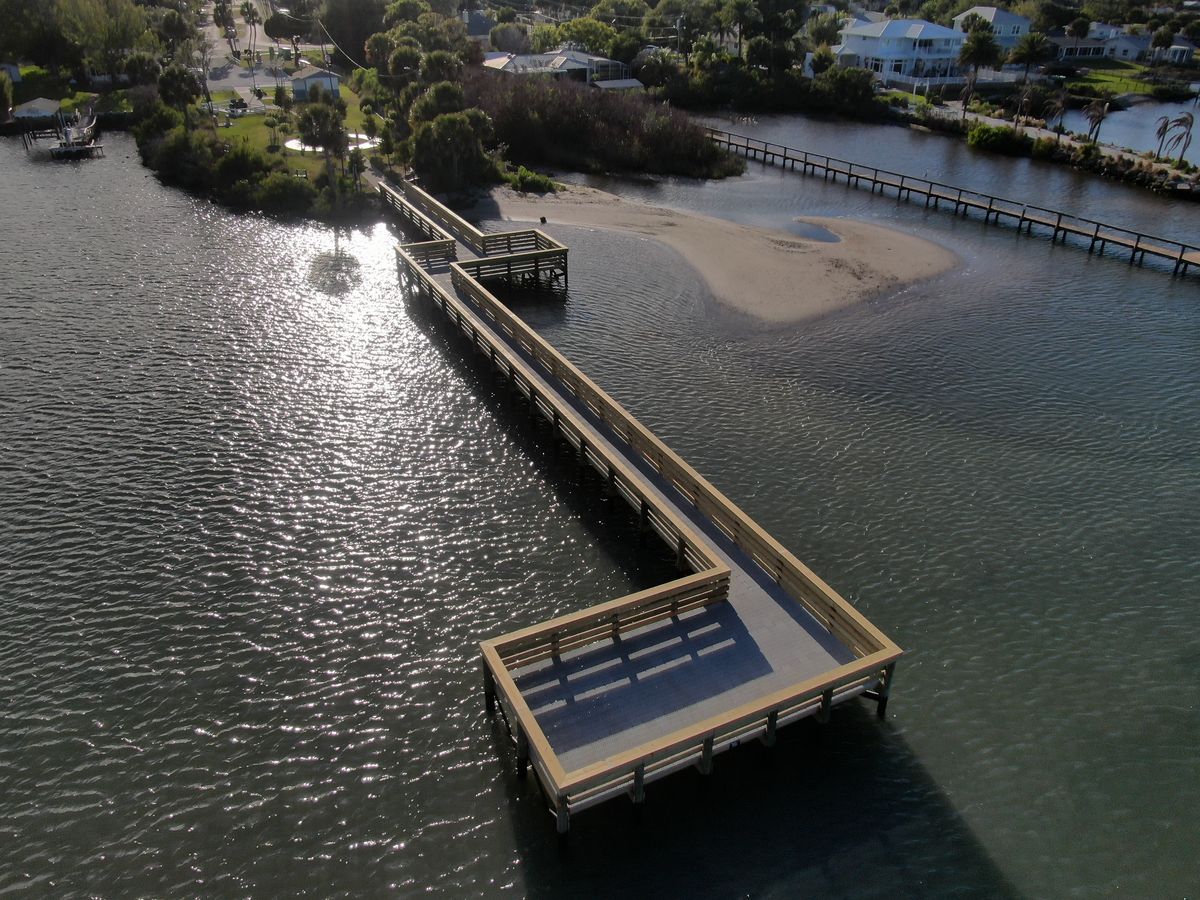
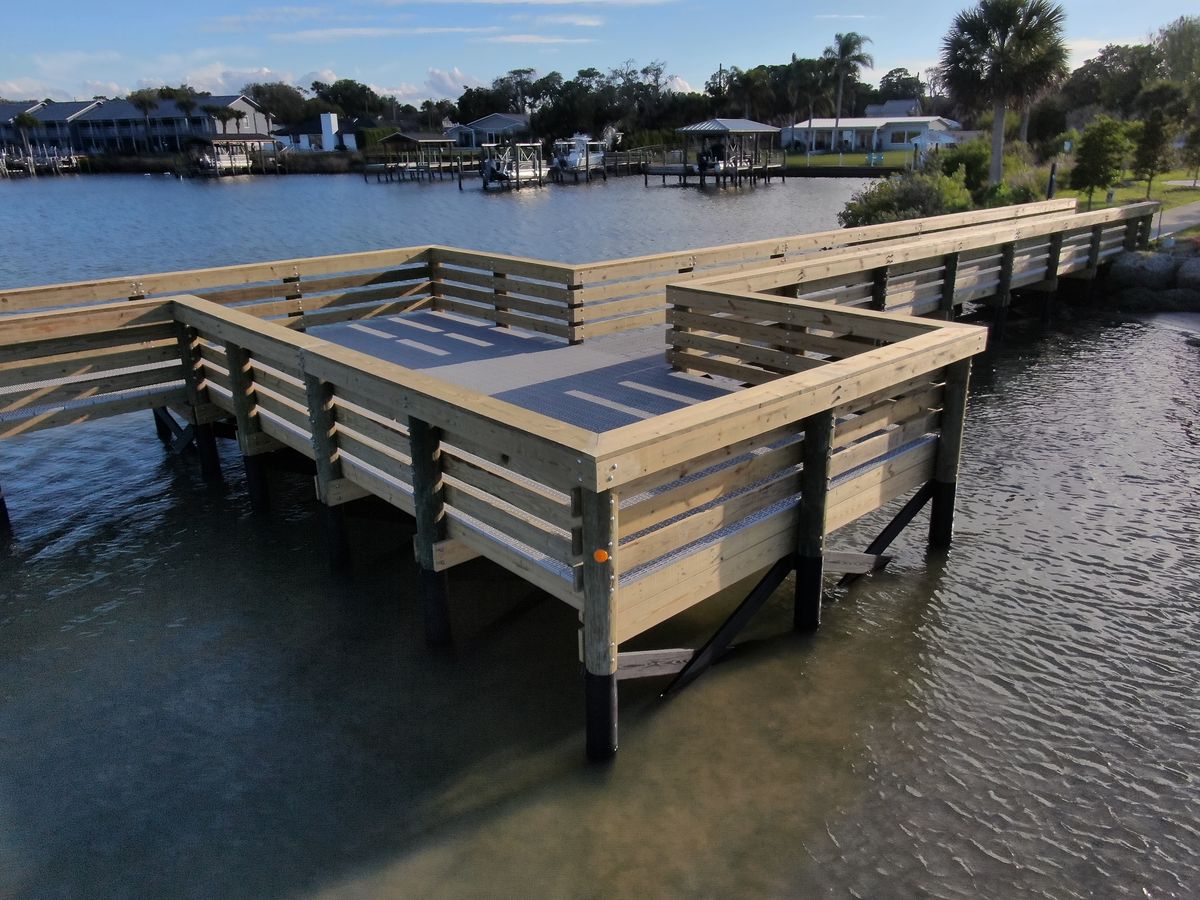
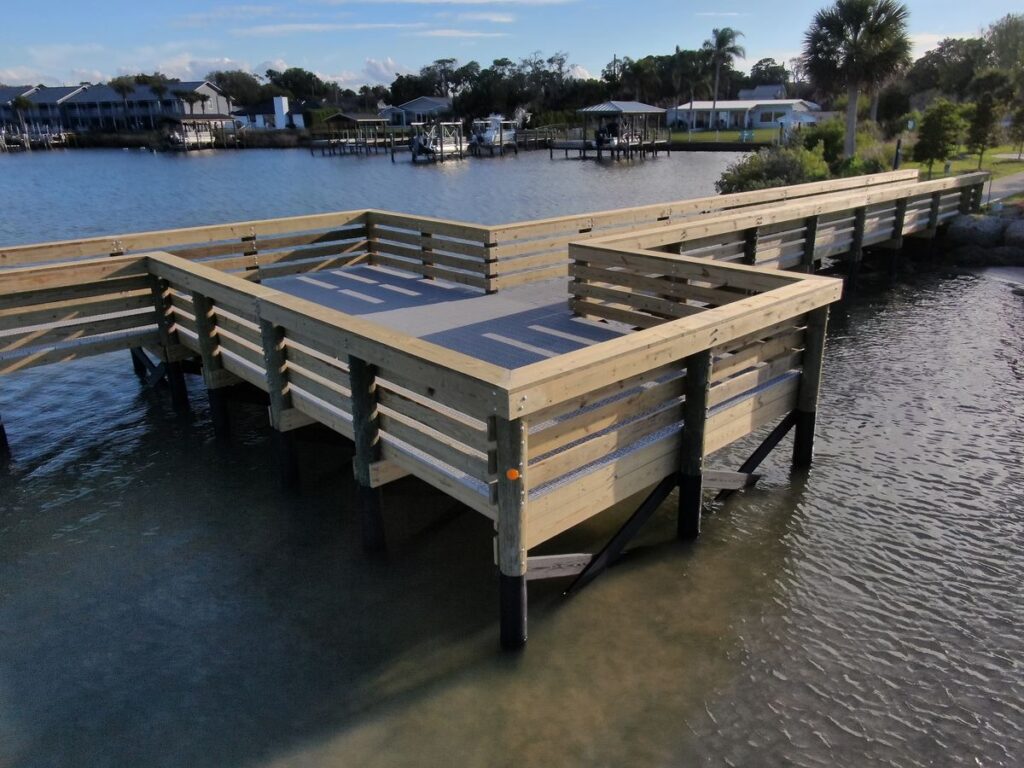
The design addresses uplift in two ways. First, the pier sits on longer pilings than the original structure, giving each one more length in the river bottom to resist upward force. Second, the deck is ThruFlow grated decking instead of solid boards. Water and air pass through the open grid, so a rising surge has far less surface to push against.
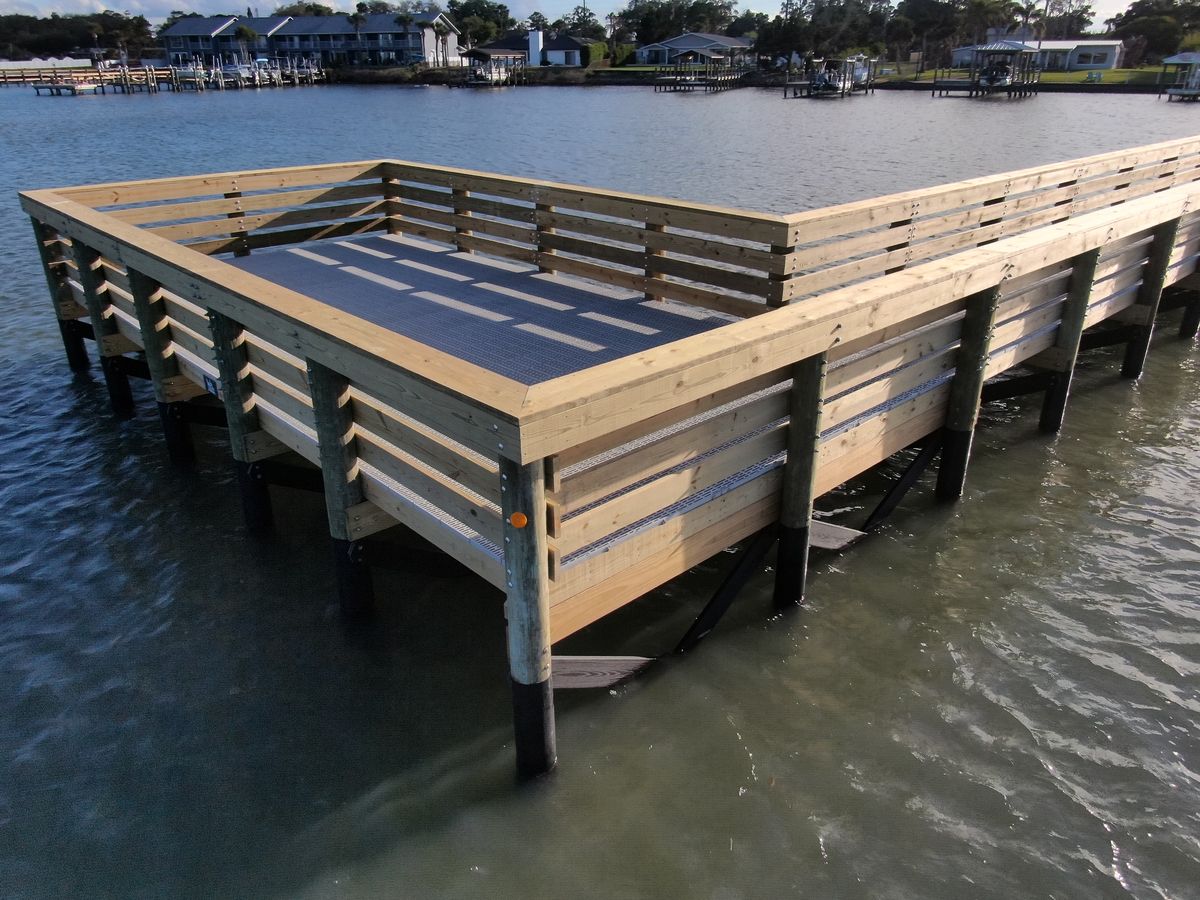
The pilings and framing are pressure treated timber, with timber railings along the walkway and around the end platform.
The New Pier Layout and Fishing Platform
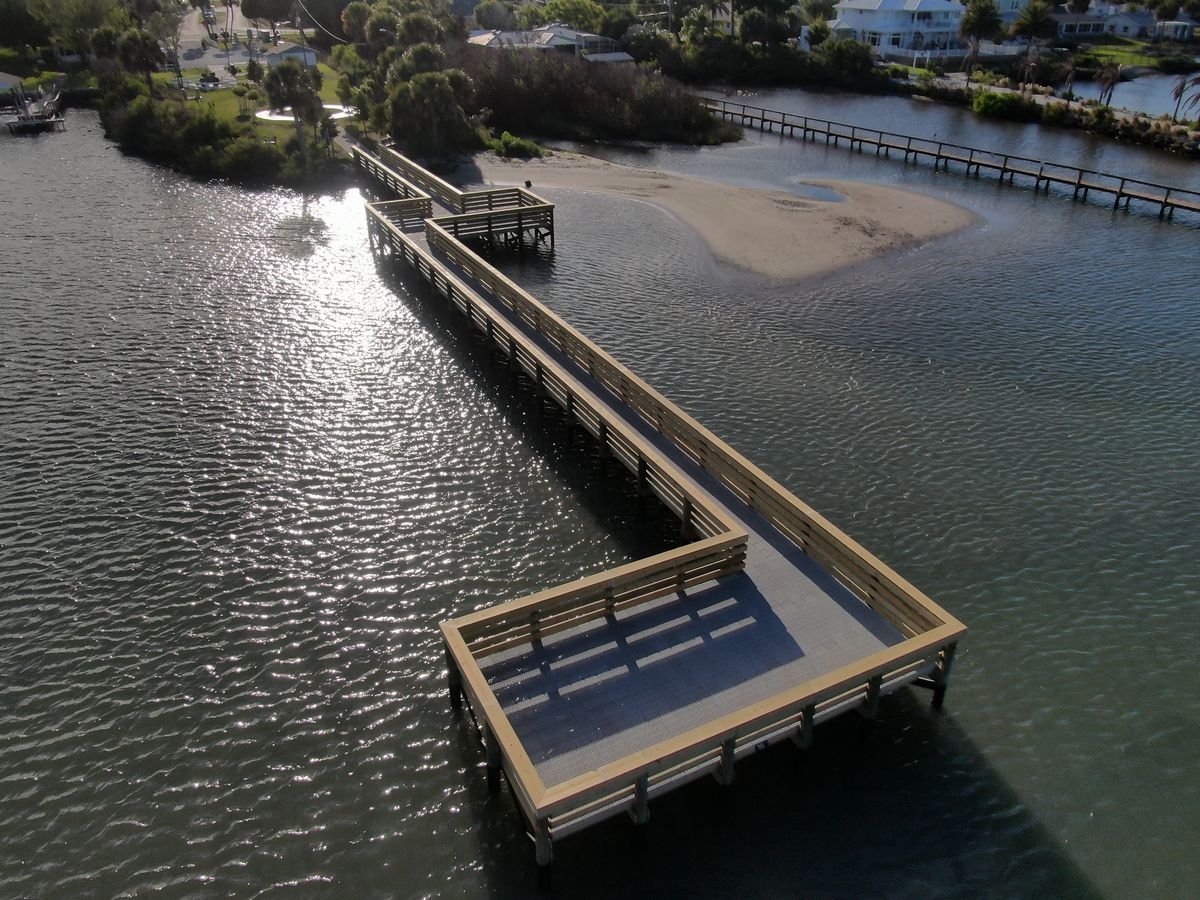
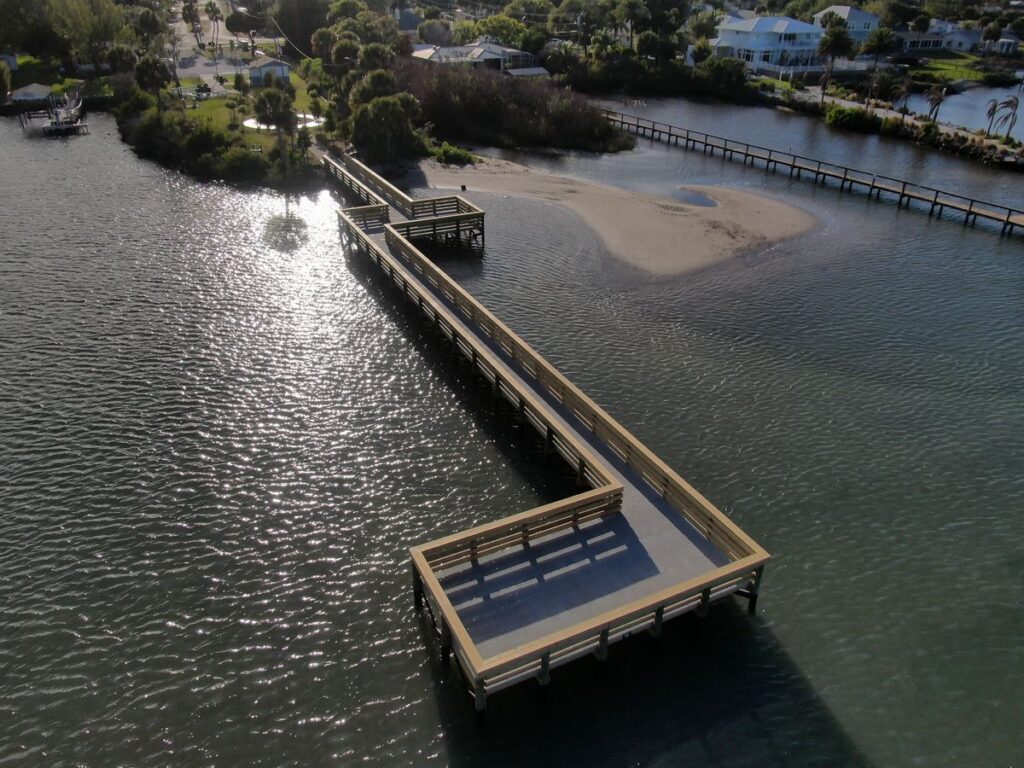
The new pier runs out from the park in a long walkway with an offset partway along, then ends in a wide platform with railings on all sides. The platform gives anglers room to spread out over deeper water, away from the sandbars near shore. The walkway ties into the park’s existing concrete path, so visitors can walk from the grounds straight out onto the river.
The Finished Result
Veterans Memorial Park has its fishing pier back for the first time since the storms. Anglers can once again reach deeper water from shore, and the pier gives visitors a reason to walk out over the river instead of stopping at the bank.
This was one of two pier replacements WB Williamson Bros. completed for the City of Edgewater. The other, at Menard-May Park, also included protection for the shoreline sidewalk.
Materials and Specifications
- Approximately 2,500 sq. ft. public fishing pier
- ThruFlow grated decking panels
- Longer timber pilings than the original structure
- Pressure treated timber framing
- Timber railings along the walkway and end platform
- Shallow draft barge for construction access
Planning a Public Pier in Shallow Water? What to Consider Early
Shallow water affects nearly every part of a pier project. Cities and other public owners should think through these points before the design is final:
- Equipment access. Confirm what draft the work area allows at low tide. Smaller barges carry less per trip, which affects the schedule.
- The river bottom. Plan equipment routes and staging around sandbars and other sensitive areas.
- Uplift. Shallow water does not mean low risk. Storm surge can raise water levels enough to put the deck in the path of waves.
- Decking choice. Grated decking reduces the surface area a surge can push against.
- Public use. Railing height, platform size, and slip resistance all matter when anglers and families use the pier every day.
Let's Talk About Your Project
Since 1996, WB Williamson Bros. has built piers, docks, and seawalls for public agencies and private owners. If your city or park is replacing a storm damaged pier or planning a new public access point, our team can review the site and help plan a structure suited to its conditions.
Call 239-283-2013 or fill out the form below to schedule a consultation.