
Replacing a Failing CBS Seawall at a North Fort Myers Rental Property
WB Williamson Bros. was called to a North Fort Myers canal home where the existing seawall had reached the point of failure. The wall was built from CBS, or concrete block, a construction method found along many older canal properties in the area. After years of tidal movement, saltwater exposure, and pressure from the soil behind it, the wall could no longer be counted on to hold the yard in place.
The property is also utilized as a rental. That added a second layer to the job. A failing seawall is a structural problem for any owner, but on a rental it also affects guest safety, the condition of the backyard, and how quickly the property can get back to hosting.
The scope included a full 105 foot seawall replacement using precast concrete panels made by our own team and a new cap reinforced with non corrosive GFRP rebar. The most difficult part of the project was not the wall itself, but the narrow strip of ground between the pool and the seawall where all of the work had to occur.
LOCATION
PROJECT TYPE
Wall System
Primary Challenge
The Client’s Situation
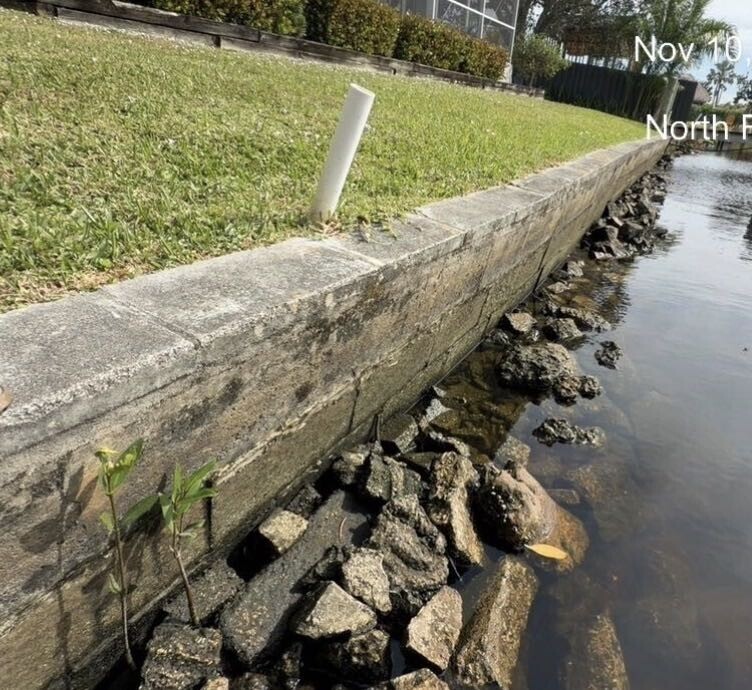
The owner came to us with a seawall that was clearly failing. CBS walls were a common choice on older Southwest Florida canal lots, and many of them served their properties well for decades. Over time, though, block walls tend to show their age in predictable ways. Mortar joints open up, grouted cells lose their bond, and water moving through the wall begins to carry soil out from behind it.
Because the home is rented to guests, the owner also had practical concerns beyond the structure. The backyard, pool area, and canal edge are a big part of what guests book the property for. A wall that was moving or losing soil behind it put that space at risk and was not something the owner wanted to leave for another season.
The goal was a permanent replacement that would hold up for the long term, protect the pool and yard behind it, and let the property return to normal use.
What Made This Project Challenging
Seawall replacement is work our crews handle every week. A few conditions on this property required more planning than usual.
A Failing Concrete Block Wall
Very Little Room Between the Pool and the Seawall
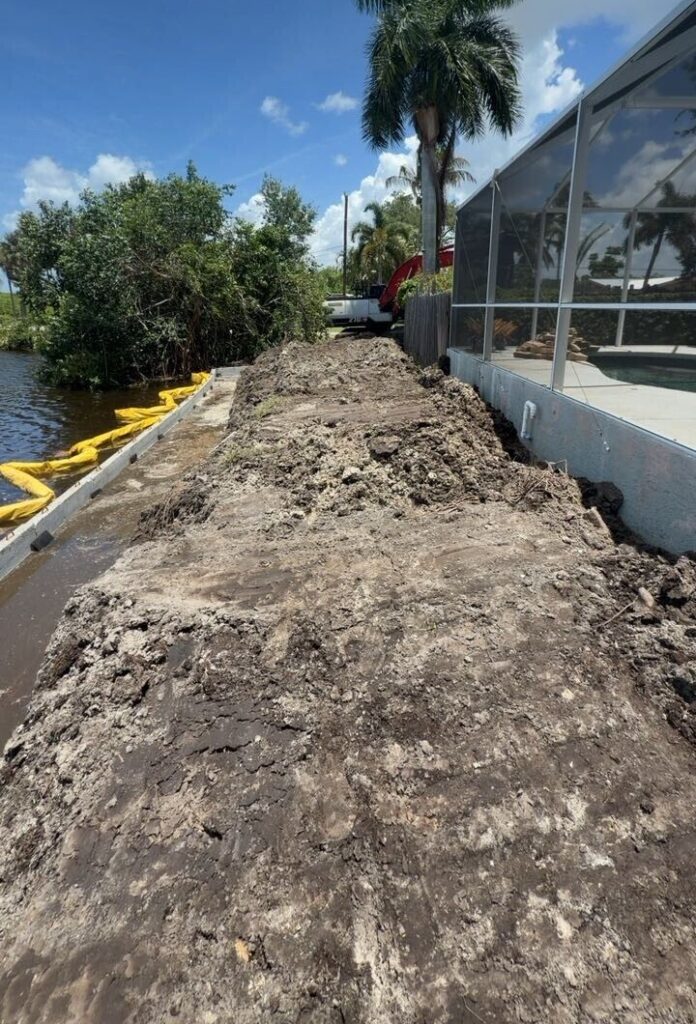
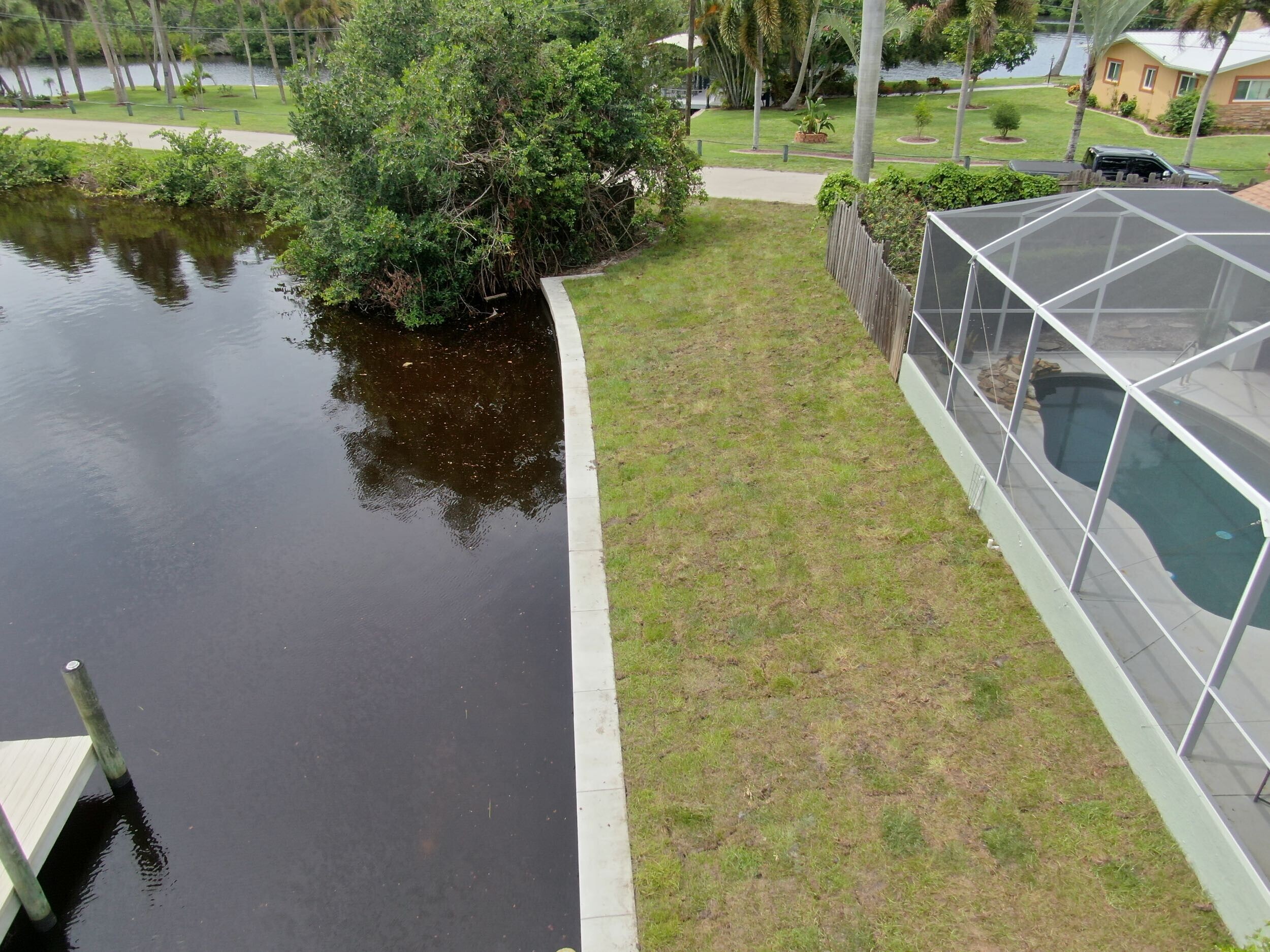
This was the defining challenge of the project. The pool sits close to the seawall, which left only a narrow strip of ground for excavation, forming, and the cap pour. There was no space to bring large equipment through the yard, and the pool, its deck, and had to be protected the entire time.
That meant planning every step around access: how the old wall would be removed, how 21 precast panels would be set, and how the new cap would be formed and poured without putting weight or equipment where it could damage the pool.
A Property With Guests to Consider
A rental property adds scheduling and safety considerations that a primary residence does not. The work area had to be kept secure, and the project needed to move efficiently so the owner could get the backyard back in service.
Our Seawall Replacement Solution
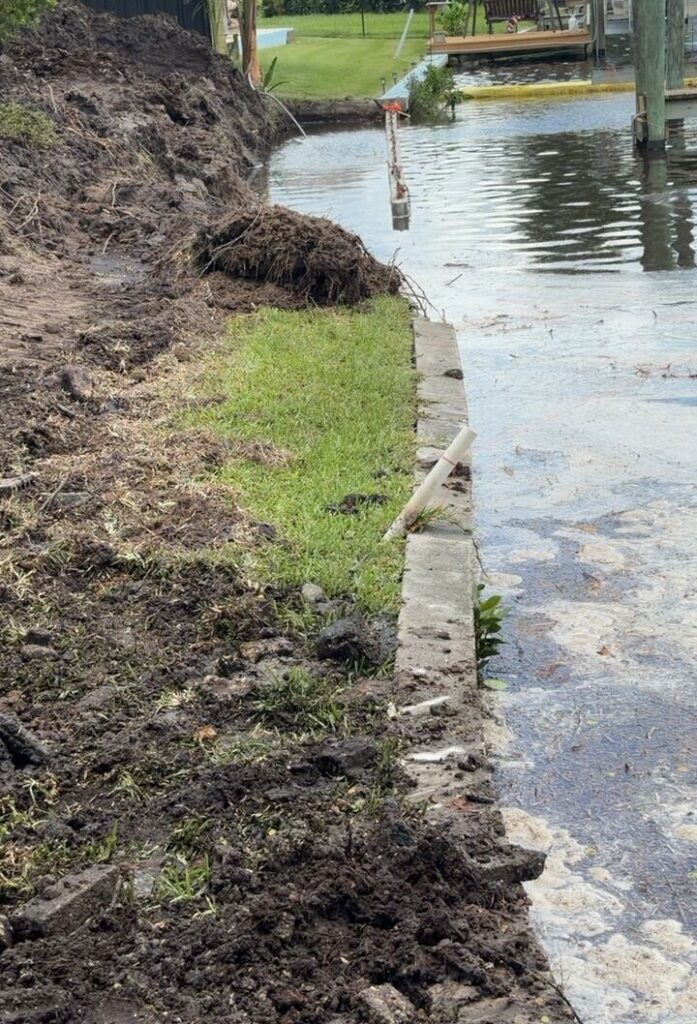
After demolishing the old seawall cap with a pneumatic jackhammer, our team confirmed that most of the existing tie back rods were still structurally sound.
The failure was concentrated at the final section of each rod where it had been embedded into the cap.
Rather than replace the entire tie back system unnecessarily, we removed the corroded rod ends and spliced in new sections using mechanical bar splicing Zap Screwloks.
We then formed and poured a new seawall cap measuring 10 inches thick by 20 inches wide.
The new cap was reinforced with GFRP, or glass fiber reinforced polymer rebar. Unlike traditional steel reinforcement, GFRP is non corrosive, making it a strong choice for saltwater marine environments.
The cap was poured with 5,000 PSI concrete to create a stronger, more durable seawall repair designed to address the actual failure point instead of simply covering the visible cracking.
Our Seawall Replacement Solution
With access limited on the land side, our team worked from the canal, using a barge and crane to remove the old wall and set the new panels, which kept heavy equipment out of the yard entirely. Work in the narrow strip between the pool and the seawall was limited to what had to happen there: excavation behind the wall, cap forming, and the pour.
The new wall was built with fiber reinforced precast concrete panels measuring 10 feet tall, 6 inches thick, and 5 feet wide. The panels were made from 5,000 PSI concrete. WB Williamson Bros. is one of the few seawall contractors that pours its own precast concrete panels, which gives us control over the mix, the reinforcement, and the quality of every panel that goes into a wall.
Across the 105 foot run, that works out to 21 five foot panels. The panels were capped with a new 10 inch by 20 inch concrete cap, also poured at 5,000 PSI with fiber reinforcement. Instead of traditional steel, the cap was reinforced with GFRP, or glass fiber reinforced polymer, rebar. GFRP does not rust. In a saltwater environment, rusting steel is one of the most common reasons seawall caps crack, because corroding steel expands inside the concrete around it. Using GFRP removes that failure point from the start.
It is the same cap specification we used on our Cape Coral seawall repair and custom dock project, where rusting steel at the tie back rod ends had cracked the original cap.
Why Precast Panels Instead of Rebuilding in Block
Replacing a failing CBS wall with another CBS wall would have put the owner back on the same timeline. Precast panels offer a different kind of wall.
Each panel is a single piece of reinforced concrete poured and cured under controlled conditions before it ever reaches the site. There are no mortar joints running through the face of the wall for water to work through, and fiber reinforcement throughout the concrete helps control cracking. Once the panels are set and tied together by the reinforced cap, the result is a stronger, more uniform wall than block can provide.
For a property owner, that means fewer weak points, less maintenance, and a wall designed for long term exposure to Southwest Florida canal conditions. You can read more about how we approach seawall construction on our seawall page.
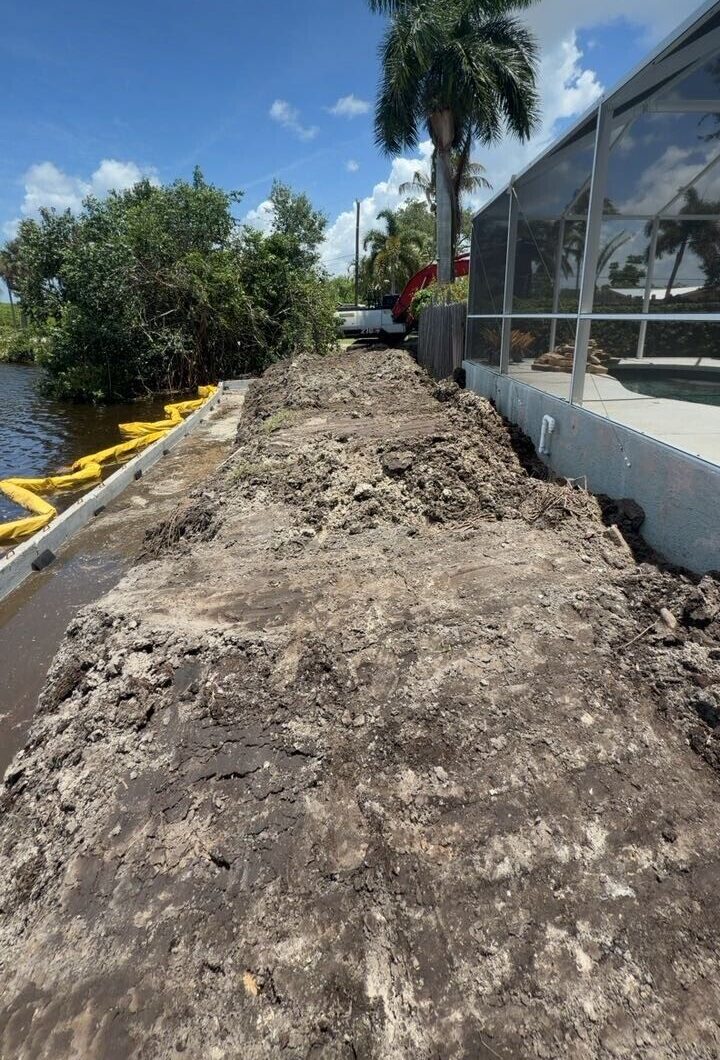
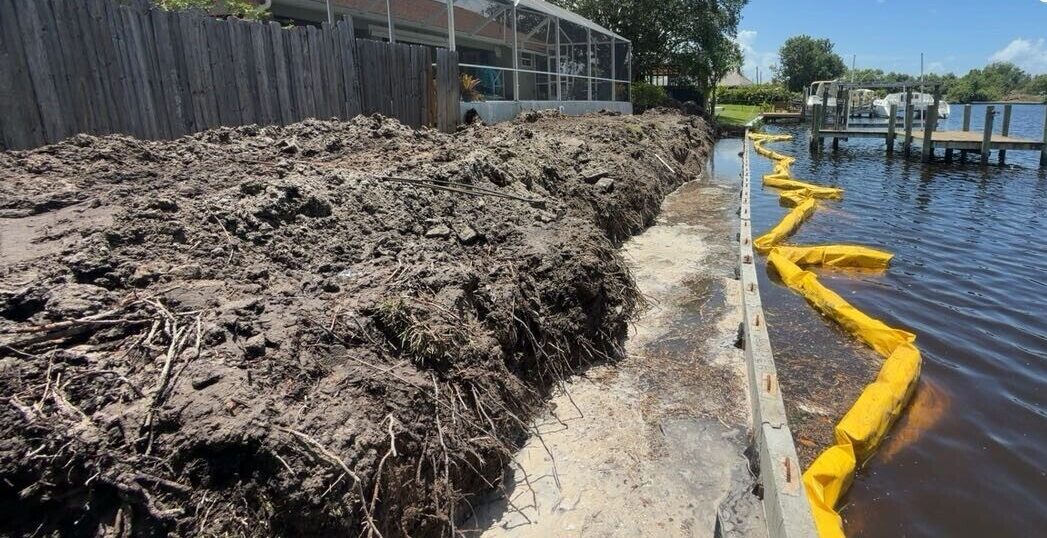
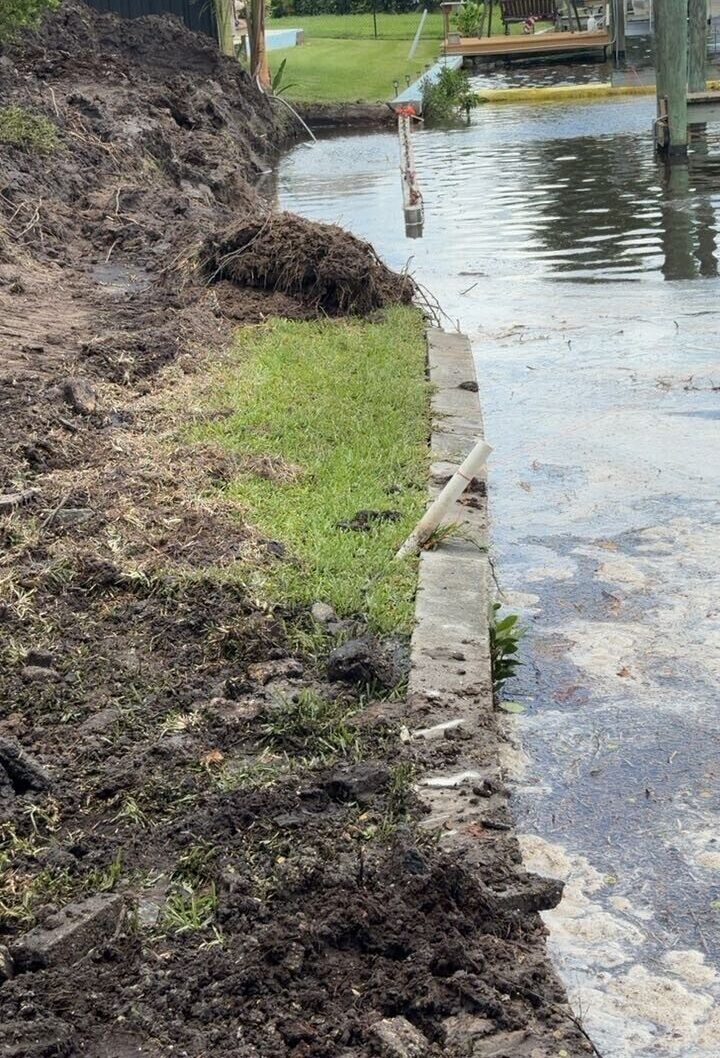
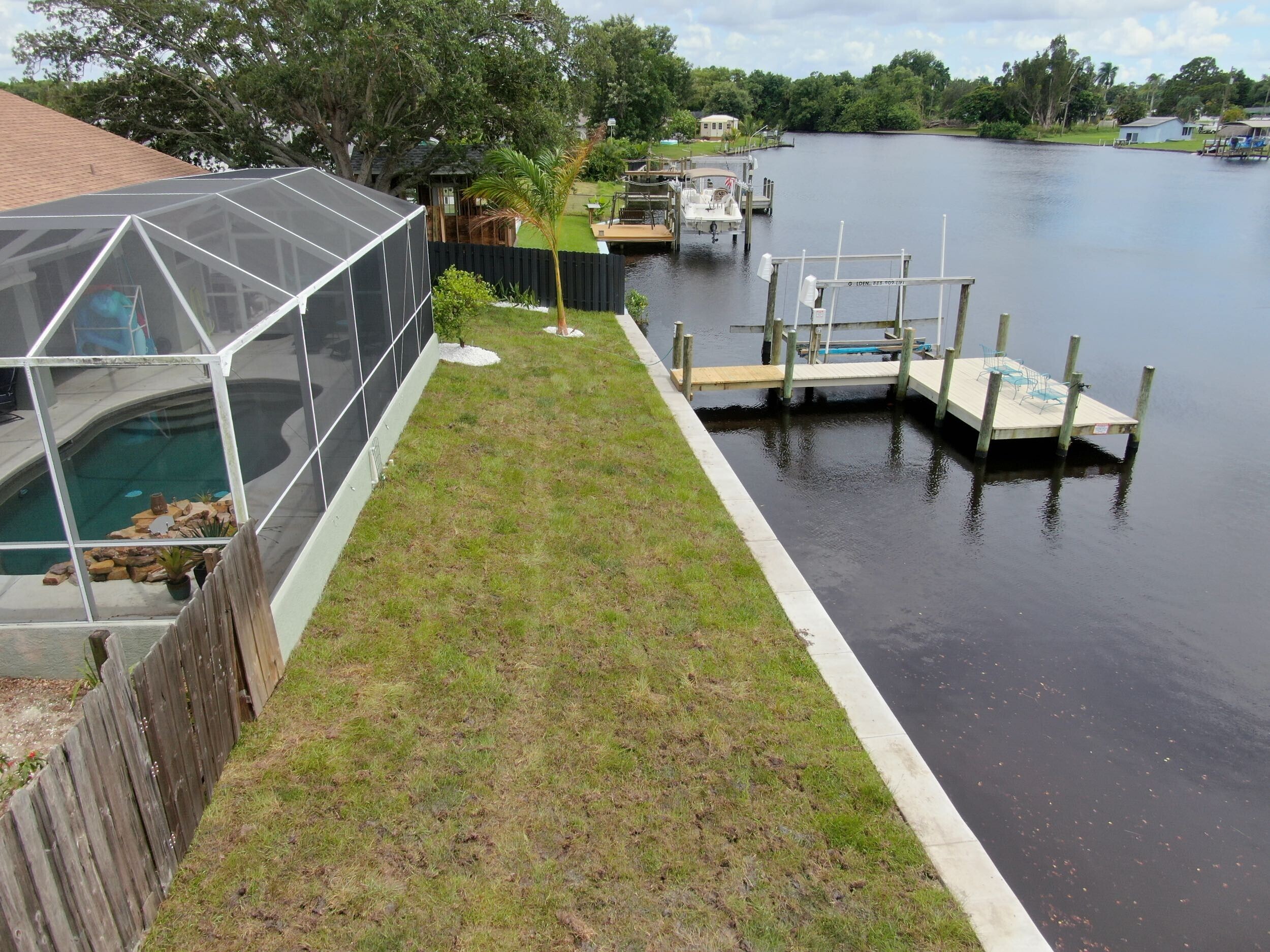
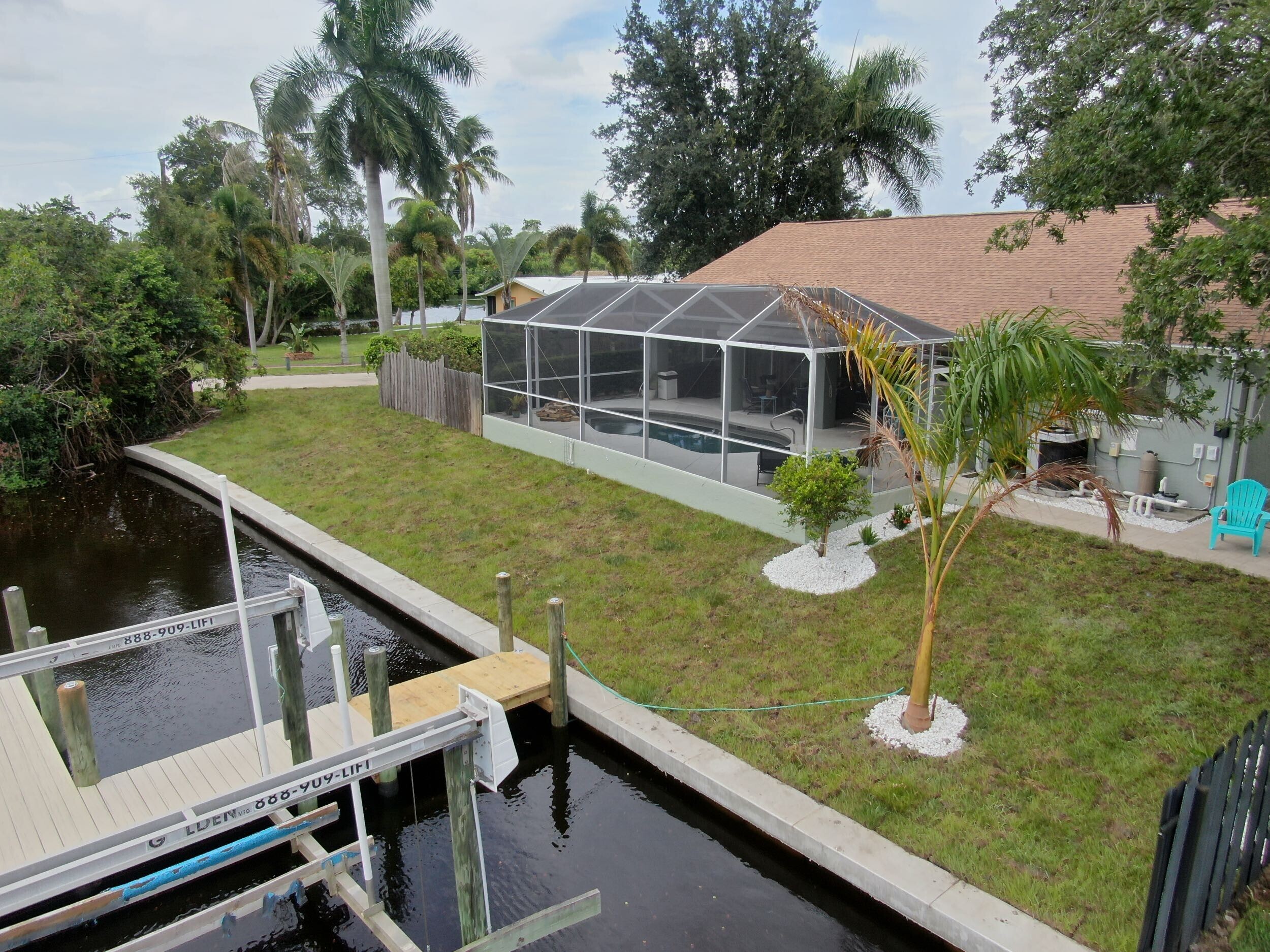
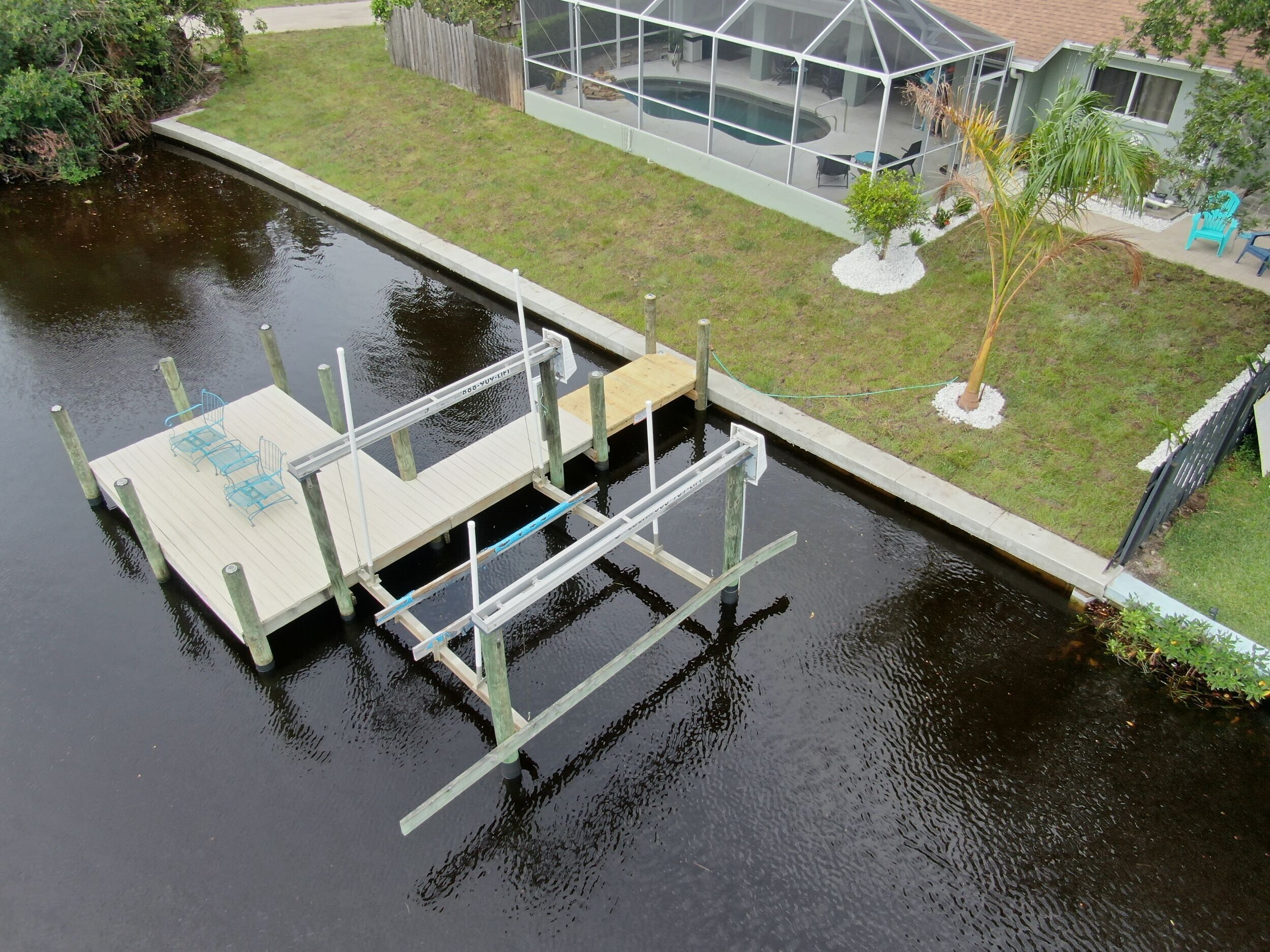
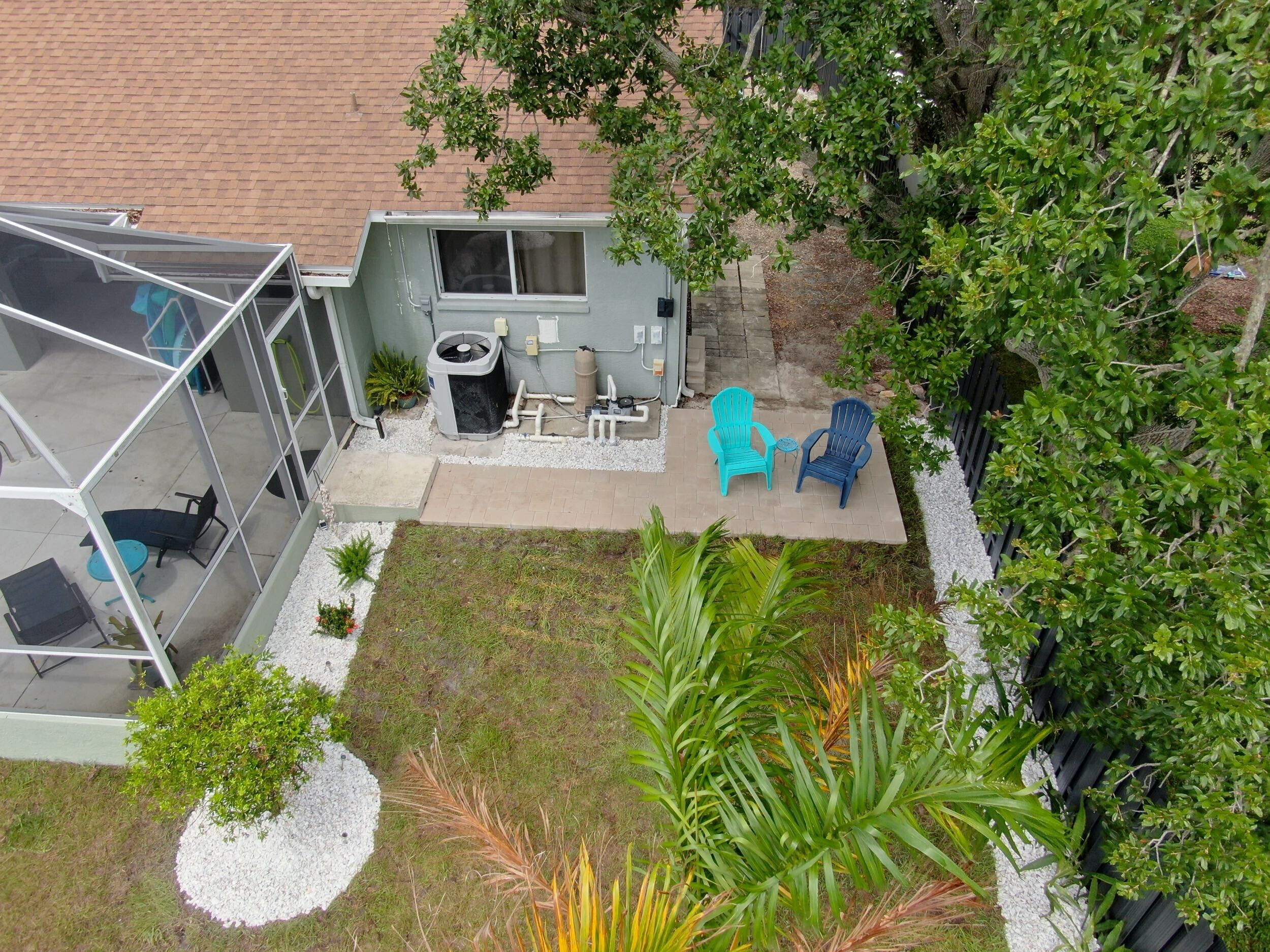
The Finished Result
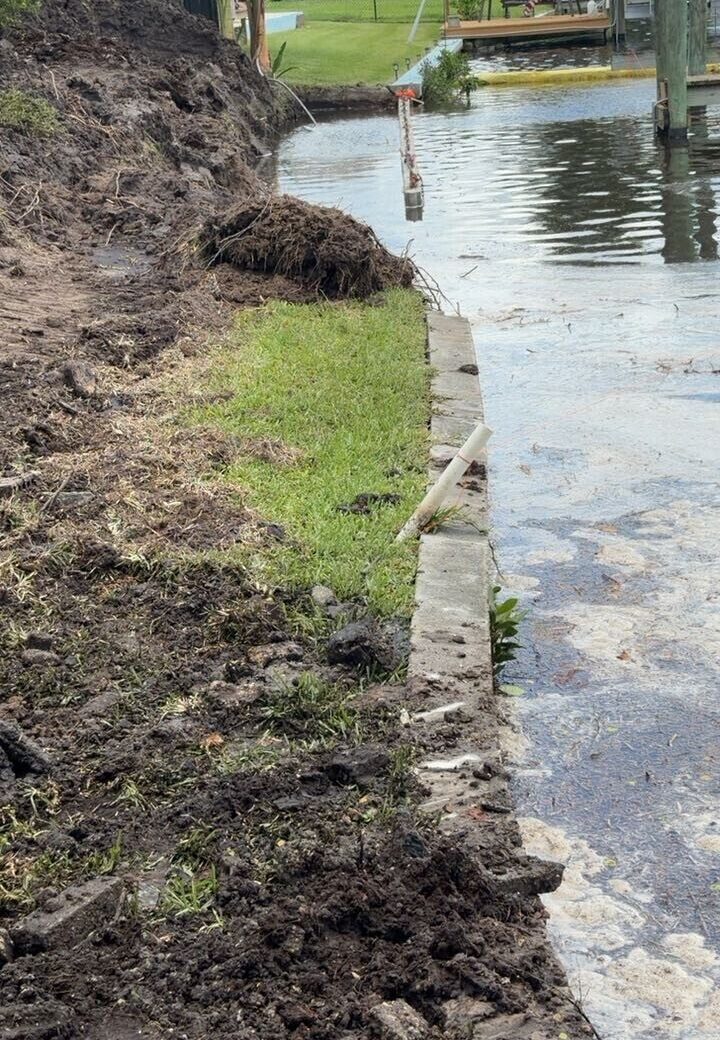
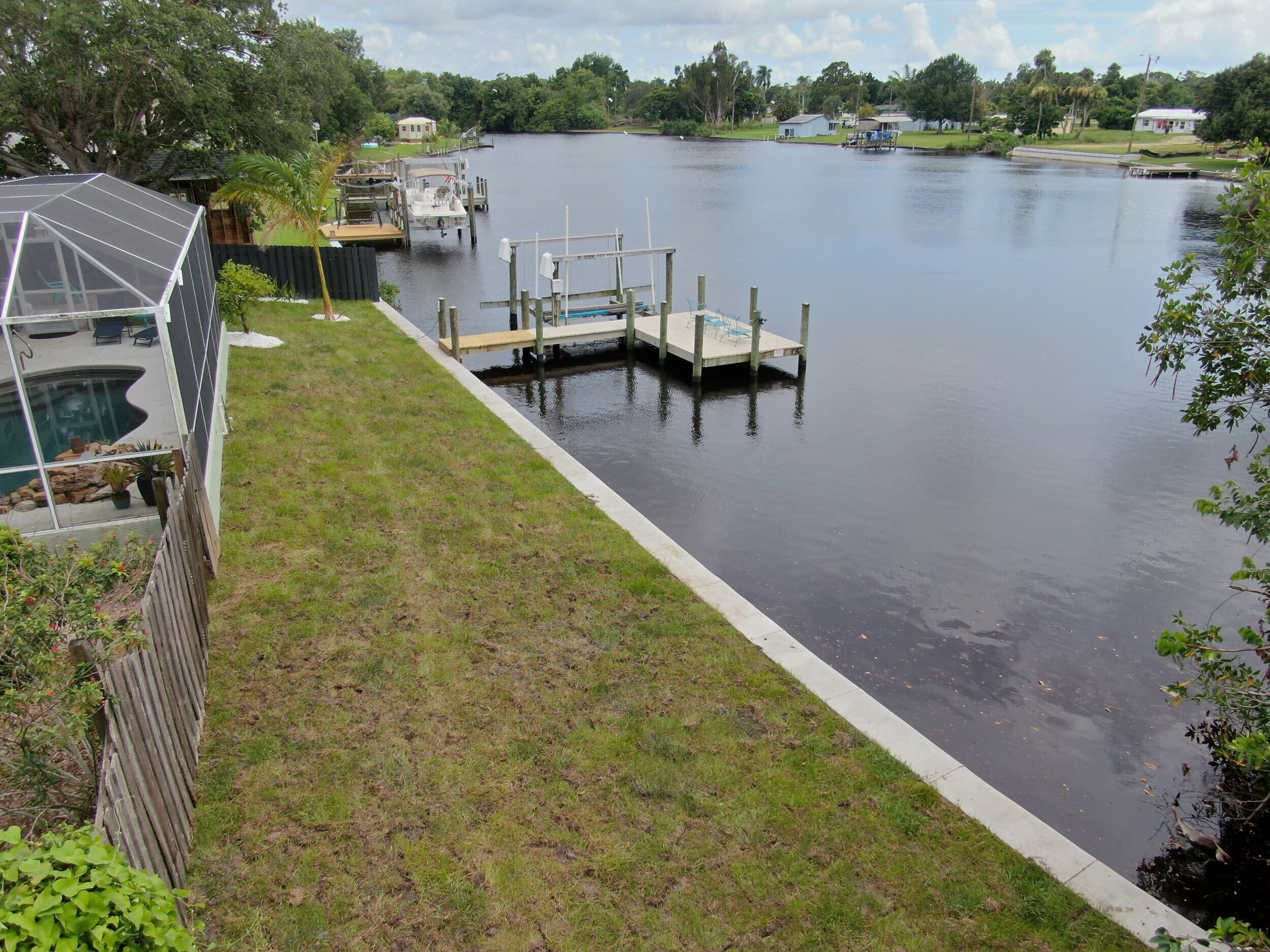
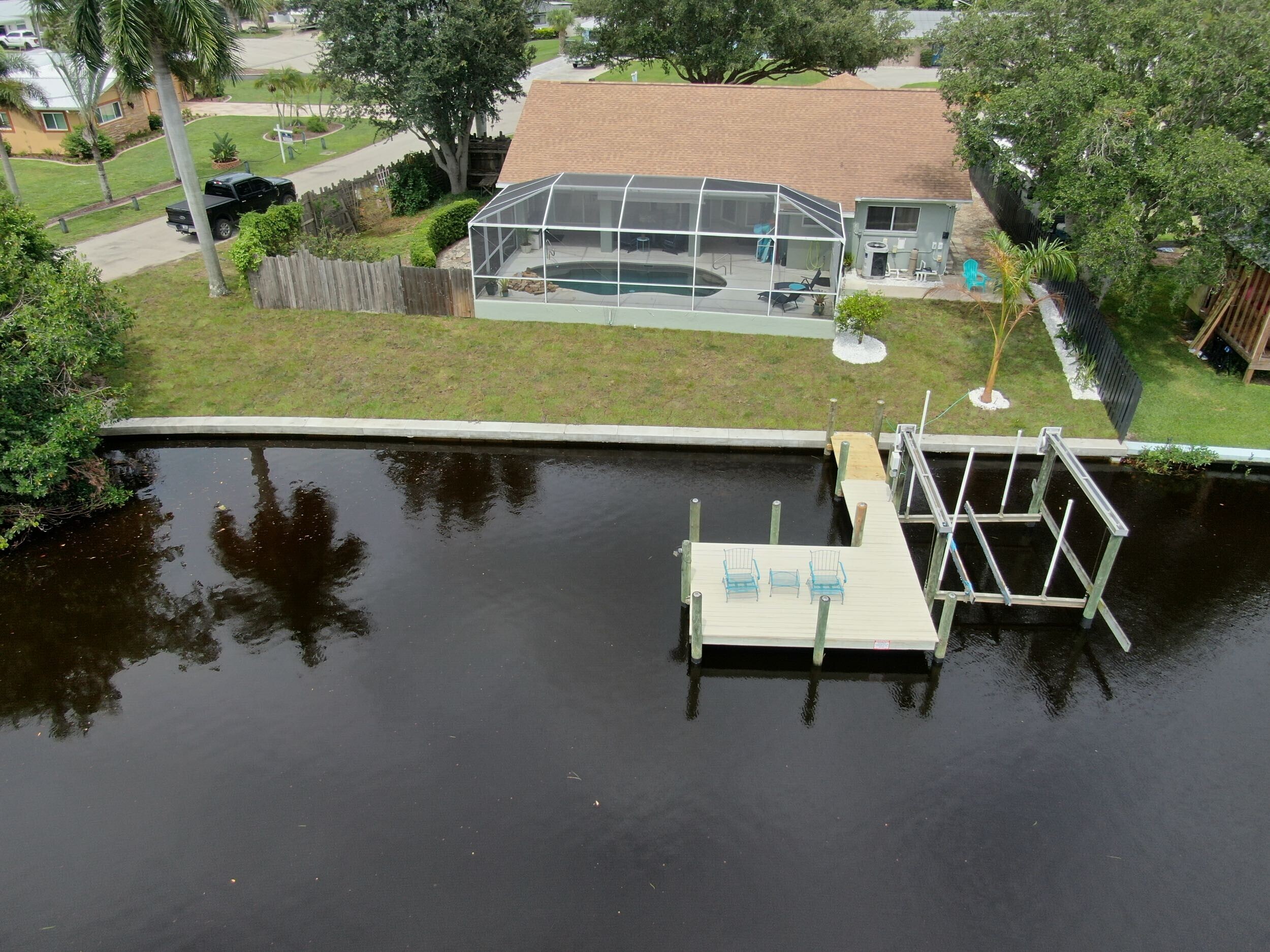
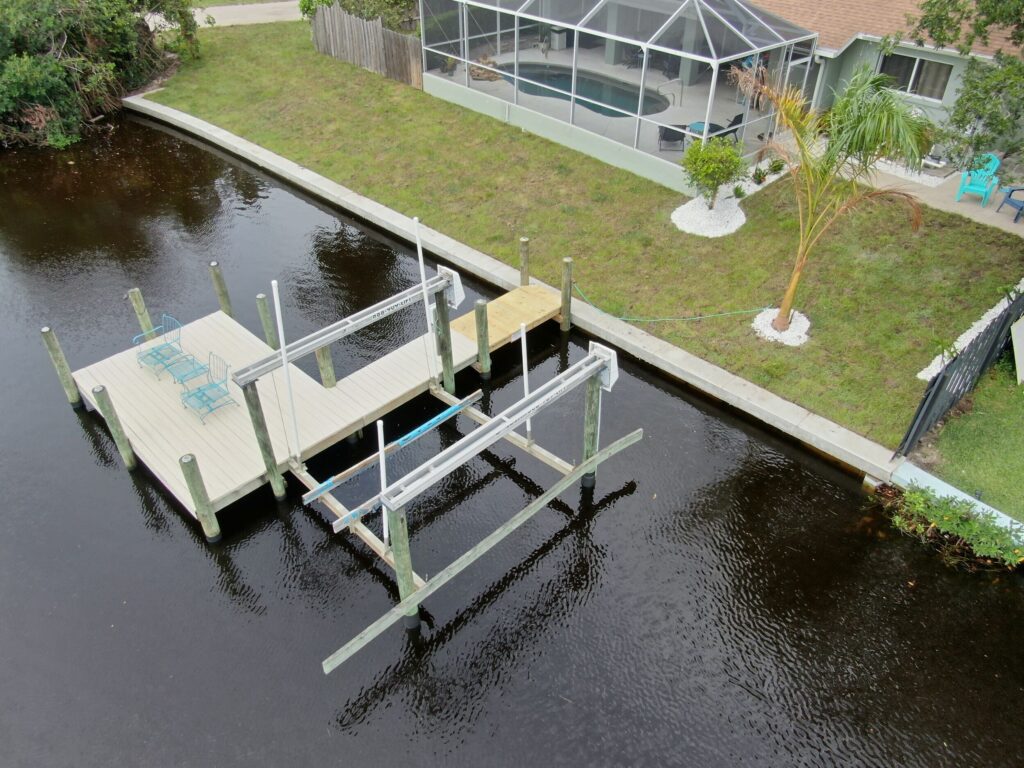
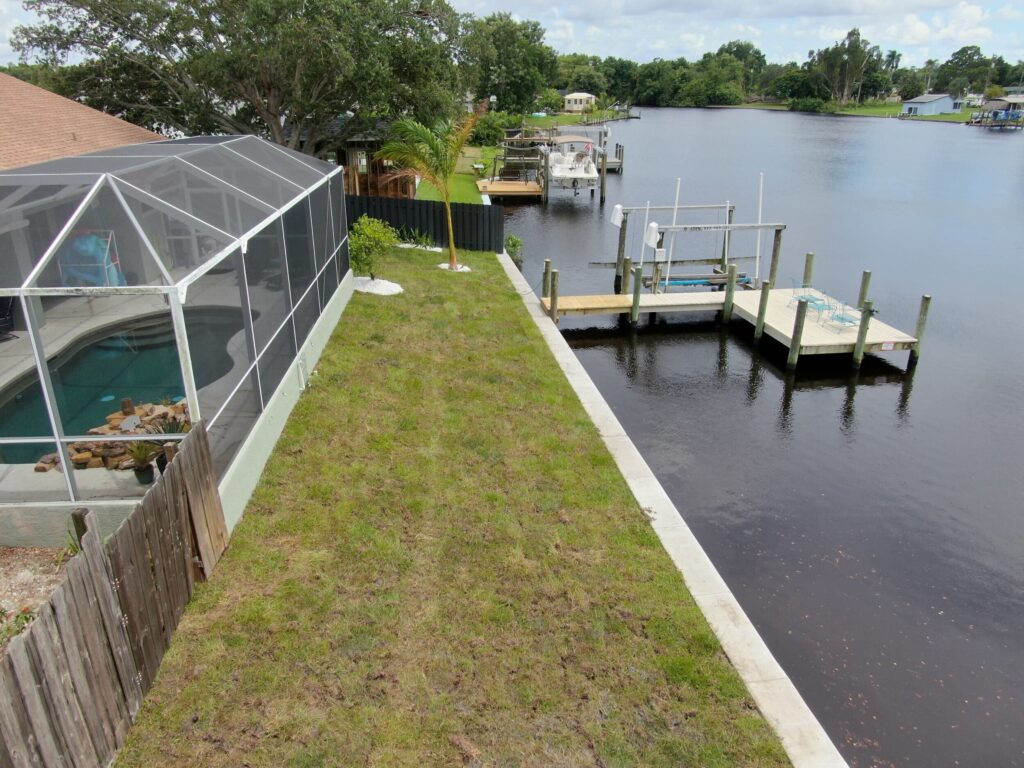
The failing CBS wall has been replaced with 105 feet of new precast seawall and a GFRP reinforced cap built to resist the corrosion that damages so many older caps in the area.
The pool and backyard were protected throughout construction, and the property is back to serving its guests with a stable, solid edge along the canal. The owner was very satisfied with the finished work.
For a rental property, that outcome matters twice over. The owner has a permanent solution to the structural problem, and guests have a backyard they can enjoy without anyone worrying about what is happening at the edge of the wate
Materials and Specifications
This North Fort Myers seawall replacement included:
- 105 linear feet of new seawall
- Fiber reinforced precast concrete panels, 10 feet by 6 inches by 5 feet wide
- 5,000 PSI concrete panels, poured by WB Williamson Bros.
- 10 inch by 20 inch fiber reinforced concrete cap
- 5,000 PSI concrete cap
- GFRP, glass fiber reinforced polymer, rebar reinforcement in the cap
Older Seawalls in North Fort Myers: What Homeowners Should Watch For
Many canal homes in North Fort Myers and throughout Lee County still have original concrete block seawalls. Some are in good shape. Others are closer to failure than they look from the yard.
If you own a property with an older seawall, these are some of the signs worth paying attention to:
- Cracks running through the block or along the mortar joints
- A cap that is cracked, separating, or showing rust stains
- Sections of the wall that lean toward the water or bow outward
- Soil loss, sinkholes, or depressions in the yard behind the wall
- Pavers, pool decking, or concrete near the wall that is settling or cracking
- Water or sediment seeping through the face of the wall at low tide
- Gaps between the wall and the neighboring seawall
Properties with pools, patios, or structures close to the wall deserve extra attention. When the ground behind a seawall starts to move, whatever sits on that ground can move with it.
If your seawall is showing any of these signs, our team can inspect it and explain what is happening. Some walls need a targeted repair. Others, like this one, are better served by a full replacement. Either way, it helps to know the condition of the wall before the decision is made for you.
Let's Talk About Your Project
For four generations, WB Williamson Bros. has been trusted by Southwest Florida waterfront property owners for dependable marine construction.
From new construction to repairs, our team handles seawalls, custom docks, boat lifts, tiki huts, and complete waterfront improvements throughout Cape Coral.
Whether your property needs a closer look or you are ready to plan your next project, we welcome the opportunity to help.
Call 239-283-2013 or fill out the form on to schedule a free consultation.